

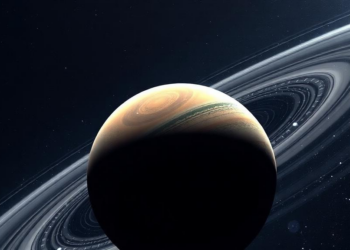
Exoplanet census reveals two distinct families of planetary systems
A large population study of more than a thousand multi-planet systems reveals two distinct families of architectures, one quiet and ...
A large population study of more than a thousand multi-planet systems reveals two distinct families of architectures, one quiet and ...

New experiments show that dry silicate pebbles falling through Earth's hot hydrogen atmosphere could have generated the planet's water through ...
The Neptune-sized exoplanet GJ 3090 b orbits its M dwarf star in the opposite direction to the star's rotation, challenging ...
The detection of niobium in a polluted white dwarf suggests the contaminating debris came from a second-generation giant planet formed ...
A new Nature Astronomy study from the University of Copenhagen finds that Earth formed mainly through pebble accretion while Mars ...
Isotopic analysis of NASA's OSIRIS-REx samples shows asteroid Bennu formed near the water-ice line in a mixing zone shaped by ...
A new comprehensive review in Living Reviews in Computational Astrophysics provides researchers with a detailed guidebook for building, testing, and ...
The Atacama Large Millimeter/submillimeter Array (ALMA) has recently unveiled significant insights into the formation of planetary systems through its observations ...

Embark on a thrilling journey of discovery with Scienmag.com—your ultimate source for cutting-edge breakthroughs. Immerse yourself in a world where curiosity knows no limits and tomorrow’s possibilities become today’s reality!