


Disposable coffee cups shed trillions of tiny plastic particles daily, hazard screen finds
A new study estimates disposable coffee cups could shed up to 2.74 × 10¹¹ submicron plastic particles per person daily ...
A new study estimates disposable coffee cups could shed up to 2.74 × 10¹¹ submicron plastic particles per person daily ...

Researchers have reported an improved multi-objective particle swarm optimization algorithm, called MCMOPSO, that integrates a density-morphology archive maintenance method with ...
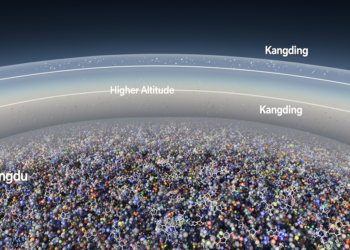
A study of two Southwest Chinese cities at different altitudes found that PM2.5 concentrations, sources, and particle mixing states differ ...

ETH Zurich and PSI researchers produced a cold, high-intensity muonium beam that could enable an interferometric test of gravity’s effect ...

A three-dimensional simulation test found that TPHT reconstructed selected cloud-particle histories with an estimated 5.2-fold reduction in retained output after ...
A theoretical Southampton–Kanpur study proposes that a slowly decaying heavy neutrino may have altered early-universe conditions that shaped the surviving ...
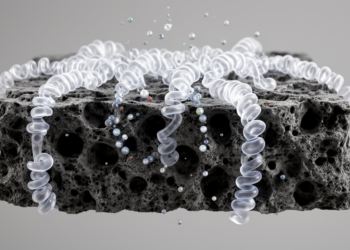
A simple polymer additive shapes a five-metal oxide into a porous supercapacitor electrode, delivering 557.6 F g−1 and 64.2 Wh ...
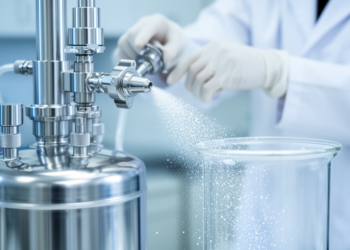
The appeal of supercritical carbon dioxide as a processing medium stems from its accessible critical point, with a critical temperature ...

Pharmaceutical science is quietly undergoing one of its most consequential transformations in decades, and a forthcoming special issue of the ...


Embark on a thrilling journey of discovery with Scienmag.com—your ultimate source for cutting-edge breakthroughs. Immerse yourself in a world where curiosity knows no limits and tomorrow’s possibilities become today’s reality!