

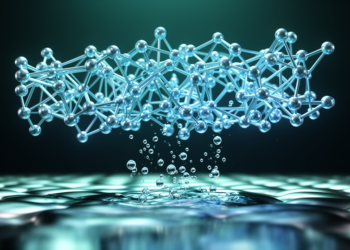
Graph neural networks reshape electrocatalyst design for green hydrogen
A new review details how graph neural networks are accelerating the discovery of electrocatalysts for green hydrogen production by learning ...
A new review details how graph neural networks are accelerating the discovery of electrocatalysts for green hydrogen production by learning ...
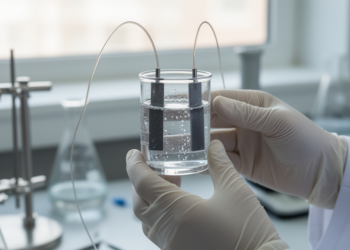
A sol-gel manganese-iron phosphide catalyst reached oxygen evolution overpotentials of 115 and 498 millivolts in alkaline water electrolysis while remaining ...
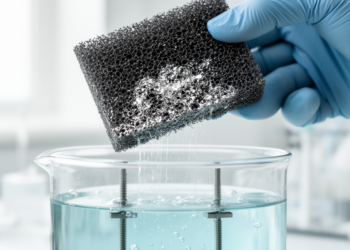
Researchers fabricated a sponge-supported nickel boride electrode doped with just 0.02 atomic percent platinum that splits simulated seawater at industrial ...

Researchers synthesized crystalline CoNiB₂ nanoflower electrocatalysts in twenty seconds using molten boron oxide, achieving an overpotential of 271 mV at ...
Ruthenium placed at octahedral cobalt sites in spinel Co3O4 activates a dual-metal reaction pathway that sustains acidic oxygen evolution for ...
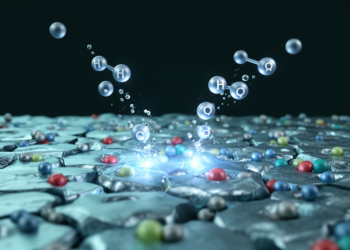
A defect-and-entropy co-engineered high-entropy layered double hydroxide cuts the oxygen evolution overpotential to 256 mV at 10 mA/cm2 and runs ...
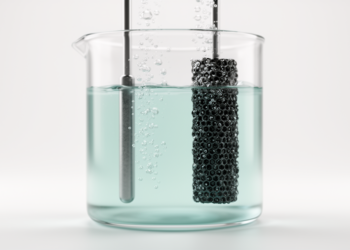
A new open-access review examines how noble-metal-free oxide–graphene nanocomposites can be designed as electrocatalysts for direct seawater electrolysis.
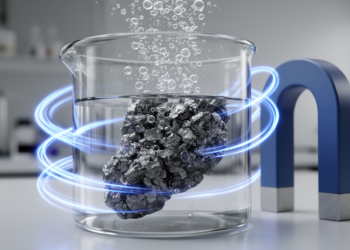
Researchers show that zinc-driven local coordination flexibility, not bulk magnetization alone, governs how strongly high-entropy spinel oxide catalysts respond to ...
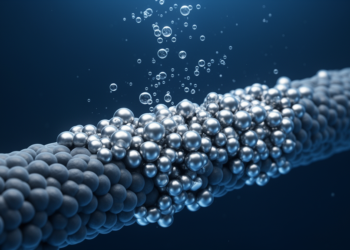
A nickel–cobalt alloy catalyst anchored on nitrogen-doped carbon nanotubes achieved low overpotentials for both water-splitting half-reactions and ran stably in ...
A laboratory study found that a boron-modified high-entropy selenide catalyst combined active-site self-repair with a chloride-repelling selenate layer to sustain ...


Embark on a thrilling journey of discovery with Scienmag.com—your ultimate source for cutting-edge breakthroughs. Immerse yourself in a world where curiosity knows no limits and tomorrow’s possibilities become today’s reality!