

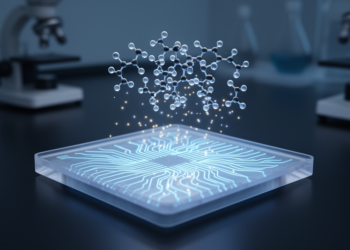
Organic molecular qubit joins photonic chip in push toward scalable quantum computing
NVision and HyperLight announced a Nature-published single-molecule spin-photon interface and a plan to integrate molecular qubits onto photonic chips.
NVision and HyperLight announced a Nature-published single-molecule spin-photon interface and a plan to integrate molecular qubits onto photonic chips.

A new conceptual framework defines impactful learning as a third stage beyond rote and meaningful learning, proposing that organic chemistry ...

Researchers at the University of Tokyo developed CYAN, a machine-learning method that extracts reaction rate constants from routine yield-optimization data, ...

The University of Bath has appointed Professor John Bower, formerly Regius Professor of Chemistry at Liverpool, as the new Raymond ...
David Nagib, Patrick Hsu and Jonathan Rivnay each received $250,000 at the 2026 Blavatnik Awards' 20th anniversary gala for breakthroughs ...
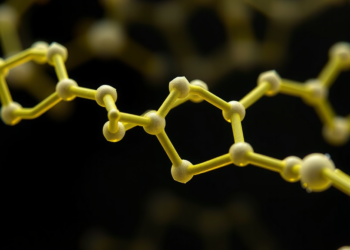
Chemists have shown that a phosphate group can migrate on its own along glycerol and inositol scaffolds through a self-sustaining ...

A new study is turning one of organic chemistry’s most familiar ideas—the stability of aromatic rings—into the starting point for ...
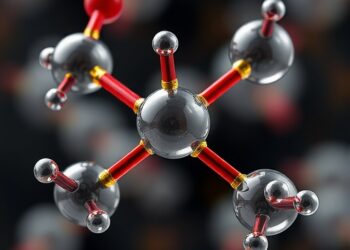
Kanazawa University researchers have developed a light-powered method that selectively breaks strong carbon–hydrogen bonds while leaving weaker carbon–silicon bonds intact—an ...

Binghamton University chemists have discovered a new mechanism that could potentially lead to quicker outcomes in pharmaceutical research. Carbon-halogen bonds ...

In a groundbreaking advancement in synthetic chemistry, researchers from Japan have unveiled a novel method for synthesizing inaoside A, a ...


Embark on a thrilling journey of discovery with Scienmag.com—your ultimate source for cutting-edge breakthroughs. Immerse yourself in a world where curiosity knows no limits and tomorrow’s possibilities become today’s reality!