


Deep Learning Pipeline Speeds Mechanical Characterization of Synthetic Plant Fibers
A deep learning framework predicts transverse stress evolution and Young's modulus in synthetic hemp fibers in under one second per ...
A deep learning framework predicts transverse stress evolution and Young's modulus in synthetic hemp fibers in under one second per ...

Researchers found that formulation-level validation is essential for reliably predicting the mechanical properties of multi-fiber hybrid epoxy composites using machine ...

A study in Discover Materials shows that adding nanoclay and seashell powder to natural fiber composites significantly improves their mechanical ...

A multi-technique characterization demonstrates that Ethiopian Enset pseudo-stem waste yields cellulosic fibers with mechanical strength and thermal stability comparable to ...
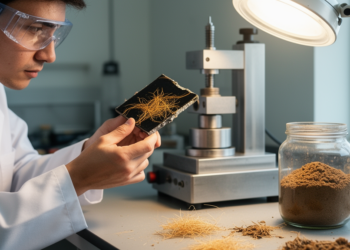
A pin-on-disc study found that adding termite soil particles to coir-reinforced epoxy sharply reduced wear under high loads while stabilizing ...

Indonesian researchers show that sago pith waste can fill unsaturated polyester composites, but rising filler content increases porosity and weakens ...
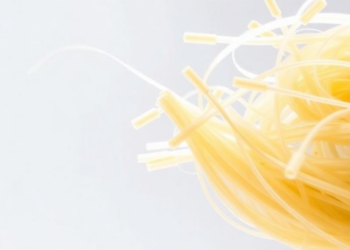
Taiwanese researchers have shown that silane-treated sugarcane fibers embedded in polyurethane-epoxy interpenetrating polymer networks reach tensile strengths of 39.3 MPa ...

In a groundbreaking study, researchers Pattar, Raghavendra, and Kumar have unveiled a novel approach to enhance the electromagnetic interference (EMI) ...


Embark on a thrilling journey of discovery with Scienmag.com—your ultimate source for cutting-edge breakthroughs. Immerse yourself in a world where curiosity knows no limits and tomorrow’s possibilities become today’s reality!