


Biopolymer Encapsulation Preserves More Than 90 Percent of Unstable Tea Catechins
Encapsulating valorized tea extract with maltodextrin and gum Arabic retained over 90 percent of epigallocatechin-3-gallate during accelerated stability testing.
Encapsulating valorized tea extract with maltodextrin and gum Arabic retained over 90 percent of epigallocatechin-3-gallate during accelerated stability testing.

Engineered silicon carbide and carbon network microspheres provide strong microwave absorption and enhanced thermal conductivity across controlled pyrolysis temperatures.

Researchers engineered silk fibroin microspheres that sequentially release dexamethasone and epidermal growth factor, suppressing inflammation and accelerating cutaneous wound closure ...
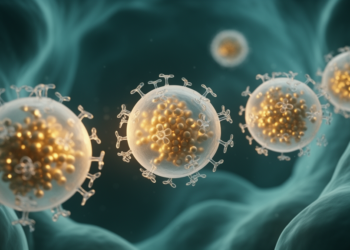
The study, published in Discover Pharmaceutical Sciences, demonstrates that encapsulating RHT in polycaprolactone microspheres and coating them with transferrin significantly ...
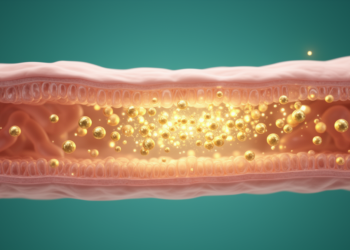
A colon-targeted sodium butyrate microsphere formulation raised fecal butyrate, lowered blood glucose and HOMA-IR, and reduced serum IL-6 in diabetic ...
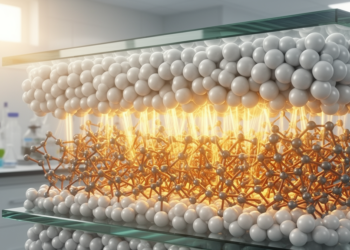
A hydrothermally synthesized TiO2 microsphere scattering layer in bilayer photoanodes raised short-circuit current and efficiency in dye-sensitized solar cells, with ...
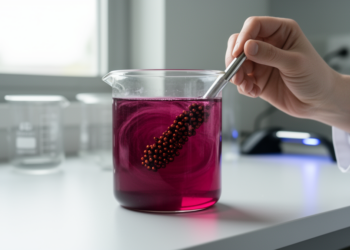
Textile dyeing is one of the most water-hungry and color-polluting industries on the planet. Every batch of fabric that leaves ...
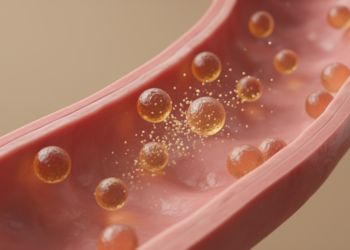
The strategic appeal of combining mucoadhesive microspheres with an orodispersible tablet platform lies in the way it addresses two distinct ...
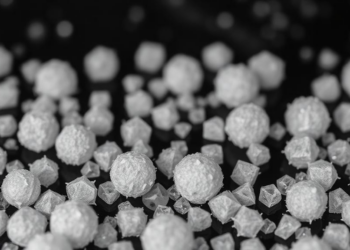
Researchers at Northeastern University have developed PEG-200-modified, glutaraldehyde-crosslinked chitosan microspheres that recover scandium(III) from acidic aqueous solutions with a maximum ...
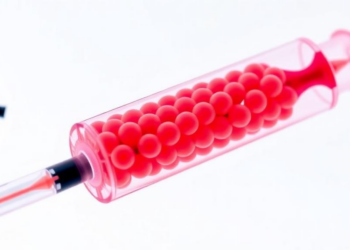
Researchers have developed an injectable hydrogel system that slowly releases fat-derived matrix-bound nanovesicles to grow new vascularized adipose tissue, with ...


Embark on a thrilling journey of discovery with Scienmag.com—your ultimate source for cutting-edge breakthroughs. Immerse yourself in a world where curiosity knows no limits and tomorrow’s possibilities become today’s reality!