


Invasive Weed Ash Nanoparticles Degrade Wastewater Pollutants Under Natural Sunlight
Nanoparticles synthesized from calcined Chromolaena odorata weed ash degraded over ninety-five percent of methyl orange dye and ciprofloxacin antibiotic under ...
Nanoparticles synthesized from calcined Chromolaena odorata weed ash degraded over ninety-five percent of methyl orange dye and ciprofloxacin antibiotic under ...

Researchers prepared polyaniline-functionalized magnetic activated carbon to efficiently remove methyl orange dye from water through spontaneous and endothermic monolayer chemisorption.
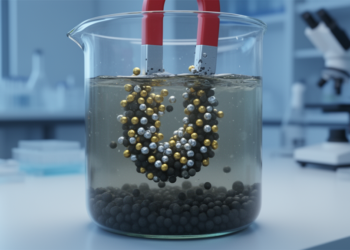
Researchers in China built a magnet-recoverable Fe3O4@Au@Ag nanocomposite that degrades over 95 percent of a model dye in four minutes ...
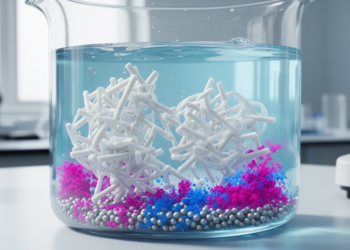
Researchers have created a ZIF-8/chitosan/ZnO nanocomposite that adsorbs up to 490 milligrams of azo dye per gram and then degrades ...
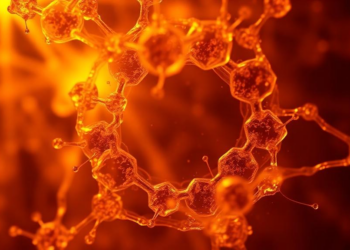
Researchers show that activating the copper MOF HKUST-1 and converting it into copper oxide yields sunlight-driven catalysts that destroy methylene ...
Chinese researchers used urea decomposition in a confined dual-crucible setup to create chlorine-doped SnO2 rich in oxygen vacancies, narrowing its ...

Researchers in Türkiye have shown that decorating chrysanthemum-like cobalt oxide microstructures with silver species boosts photoelectrocatalytic degradation of the azo ...
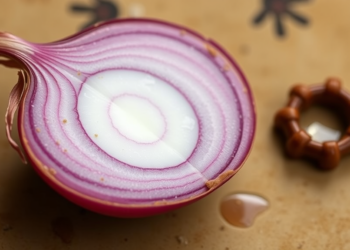
Egyptian researchers have created a magnetically recoverable nanocatalyst, built from MOF-derived porous carbon and onion-peel-synthesized silver nanoparticles, that removes about ...
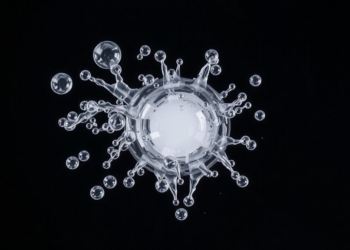
A new review distills a decade of research into hydrodynamic cavitation–hydrogen peroxide systems, revealing per-pass kinetics, synergy coefficients, and scale-up ...


Embark on a thrilling journey of discovery with Scienmag.com—your ultimate source for cutting-edge breakthroughs. Immerse yourself in a world where curiosity knows no limits and tomorrow’s possibilities become today’s reality!