

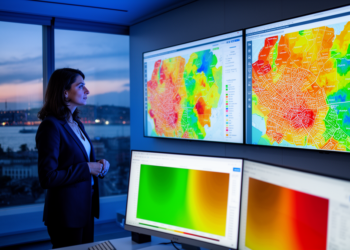
Hybrid AI Reaches 98% Accuracy Forecasting Air Quality in Data-Poor Istanbul District
Researchers built a two-stage hybrid machine learning framework combining K-Means clustering and XGBoost that predicts Istanbul's Air Quality Index with ...
Researchers built a two-stage hybrid machine learning framework combining K-Means clustering and XGBoost that predicts Istanbul's Air Quality Index with ...

A new review argues that disaster managers worldwide focus on visible wind hazards like hurricanes and wildfires while neglecting the ...
A year of continuous monitoring data from Nagpur analyzed with R's Openair package and principal component analysis reveals severe winter ...
A new self-organizing map framework defines South Asian monsoon onset and withdrawal without arbitrary thresholds, revealing that the atmosphere shifts ...
A transparent statistical framework shows that persistent site effects and local meteorological mismatch, not elaborate regime modeling, account for most ...
An eight-year analysis of monitoring data across Bangladesh shows particulate pollution declining modestly since 2018, yet winter smog and lifetime ...
New research from coastal Tianjin reveals that sea and land breezes dramatically reshape how PM2.5 and ozone respond to emission ...
A new isotope study of Xi'an's coronavirus lockdown shows haze episodes raised fossil carbon dioxide concentrations by 159 percent over ...
A three-day field campaign in Abeokuta, Nigeria, shows that unpaved road surfaces and mechanical dust resuspension push roadside PM2.5 and ...
Researchers in China have developed OzoneKBNet, a retrieval-augmented AI framework that mines historical pollution episodes to deliver more accurate 48-hour ...

Embark on a thrilling journey of discovery with Scienmag.com—your ultimate source for cutting-edge breakthroughs. Immerse yourself in a world where curiosity knows no limits and tomorrow’s possibilities become today’s reality!