


Materials World Models Proposed to Turn AI into Persistent Scientific Partners
A newly proposed materials world model framework connects multiscale computation and automated laboratories to sustain scientific continuity across materials research.
A newly proposed materials world model framework connects multiscale computation and automated laboratories to sustain scientific continuity across materials research.

Researchers developed a computational intelligence framework combining material databases and hybrid optimization to streamline functionally graded material design before experimental ...

A computational screening of experimental two-dimensional covalent organic frameworks reveals atomic-level rules governing lithium-ion battery performance and highlights their potential ...

A nested, formula-grouped machine learning study of 105 transition metal carbides finds that composition and elemental properties carry most of ...

A new perspective article argues that machine learning serves functional materials research best as a practical navigator that prioritizes candidates ...
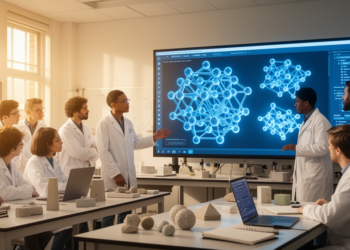
A conceptual analysis published in Frontiers in Education argues that AI literacy for materials discovery should be measured by demonstrated ...
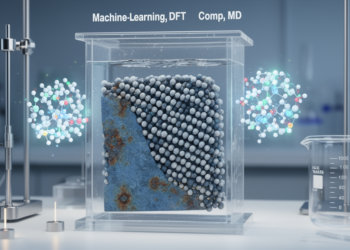
A critical review finds that integrating machine learning, quantum chemistry, molecular dynamics and experiments could accelerate corrosion-inhibitor design, but weak ...
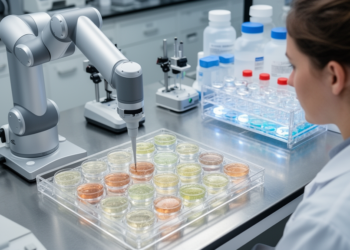
A human-supervised computational framework analyzed polyacrylamide and granular hydrogel datasets, predicted rheological properties, classified resuspension states and generated unvalidated candidate ...
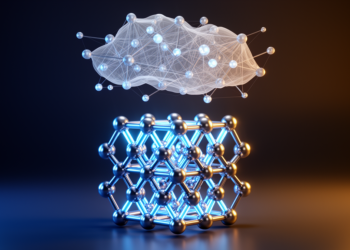
A computational study combining machine learning and first-principles calculations developed an interpretable model for predicting the Young’s modulus and yield ...
Researchers combined machine learning with GAN and SMOGN data augmentation to accurately predict the tensile properties of sub-sized nuclear steel ...


Embark on a thrilling journey of discovery with Scienmag.com—your ultimate source for cutting-edge breakthroughs. Immerse yourself in a world where curiosity knows no limits and tomorrow’s possibilities become today’s reality!