

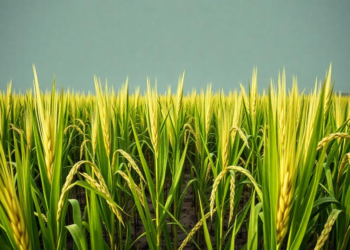
Salt in the Water, Hunger in the Fields: Rice Hits a Yield Cliff at Just 1.4 Parts Per Thousand
A controlled greenhouse study of Vietnamese rice finds that irrigation water salinity of only about 1.4 parts per thousand triggers ...
A controlled greenhouse study of Vietnamese rice finds that irrigation water salinity of only about 1.4 parts per thousand triggers ...
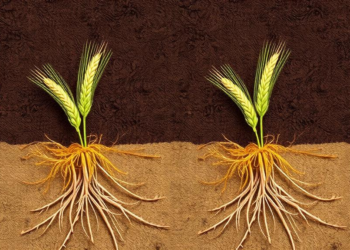
Researchers used time-lapse electrical resistivity tomography with machine learning calibration to quantify, for the first time at field scale, how ...
A factorial pot experiment shows that sheep manure biochar paired with a moderate silicon dose dramatically boosts triticale growth and ...
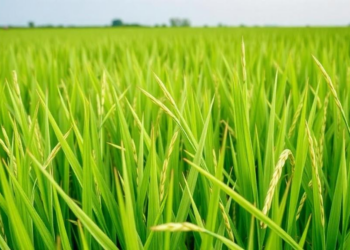
A two-year Indian field trial shows that cyhalofop plus penoxsulam delivers near-complete weed control in direct-seeded rice, while foliar nano ...
A sixteen-year Chinese field experiment shows that returning both wheat and maize straw to lime concretion black soil each year ...
A two-year field trial in saline farmland found that combining mid-range organic fertilizer with a 500-fold foliar biostimulant cut root-zone ...
Thai researchers found that salt-tolerant endophytic bacteria, especially the SHPP24 and SKPK29 isolates, significantly improved rice physiology, growth, and grain ...
A three-year field study in the North China Plain identifies optimal irrigation and nitrogen ranges that simultaneously raise grain yield, ...
A Brazilian field study shows that foliar sodium selenate reliably enriches sorghum grain with selenium, while novel selenium compounds and ...
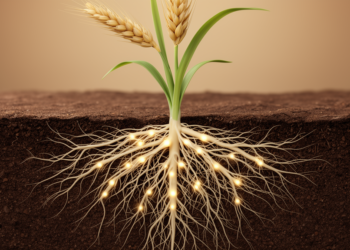
A landmark field study finds that dark septate endophytes colonize winter wheat roots more extensively than arbuscular mycorrhizal fungi across ...


Embark on a thrilling journey of discovery with Scienmag.com—your ultimate source for cutting-edge breakthroughs. Immerse yourself in a world where curiosity knows no limits and tomorrow’s possibilities become today’s reality!