

Water From a Rain of Dry Pebbles: Hydrogen May Have Made Earth’s Oceans
New experiments show that dry silicate pebbles falling through Earth's hot hydrogen atmosphere could have generated the planet's water through ...
New experiments show that dry silicate pebbles falling through Earth's hot hydrogen atmosphere could have generated the planet's water through ...
Chromium isotope analysis of 66 ancient volcanic rocks shows Earth's deep mantle became progressively more oxidized from the Archean to ...

Nanoscale examination of saprolite shows that even crystalline zircon begins to dissolve and reprecipitate as uranium- and thorium-bearing amorphous zircon ...

Coupled antimony and mercury isotope analyses of South China's giant antimony belt reveal that its metal came from both Precambrian ...
Melt inclusions in arc volcanics from Panama and Japan show heavy boron isotopes indicating that over 60 percent of slab ...
A detailed study of ferromanganese nodules from the Central Indian Ocean Basin reveals that smaller nodules carry the richest metal ...
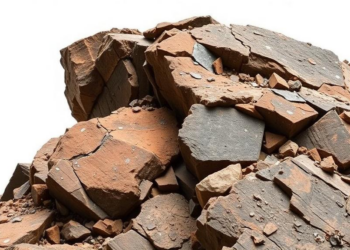
A detailed mineralogical and geochemical study of the Sendraimalai syenites in Tamil Nadu, India, reveals rare magmatic wollastonite and grossular ...
A team of geochemists and chemists argues in Nature Communications that equilibrium and rate constants at solid-water interfaces should be ...
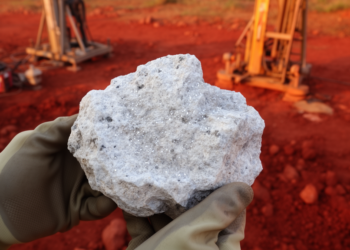
A newly analysed carbonatite plug at Khaderpet in southern India is exceptionally enriched in light rare earth elements and occurs ...
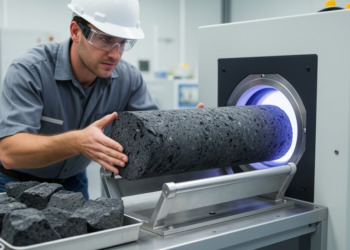
A new workflow adapts X-ray fluorescence core scanning to fractured basalt cores, delivering fast, calibrated, high-resolution chemistry that outperforms traditional ...


Embark on a thrilling journey of discovery with Scienmag.com—your ultimate source for cutting-edge breakthroughs. Immerse yourself in a world where curiosity knows no limits and tomorrow’s possibilities become today’s reality!