


Mathematical Modelling Explains Why Flapping Helps Birds Land in Limited Spaces
Mathematical modelling reveals that birds flap while landing because unpowered stops require excessive approach speeds and space.
Mathematical modelling reveals that birds flap while landing because unpowered stops require excessive approach speeds and space.

Incorporating a rigidly-convected lifting-line vortex wake model into optimal control problems for airborne wind energy systems reduces predicted harvestable power ...

A research team at Delft University of Technology has developed a computationally efficient aerodynamic framework that accelerates leading-edge inflatable kite ...

A comprehensive review examines how active flow control technologies are transforming aircraft design by replacing mechanical rudders and drastically shortening ...
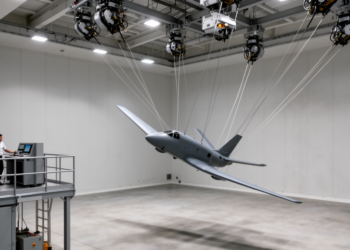
A cable-driven parallel suspension system has enabled wind tunnel tests of unstable, variable-frequency and variable-amplitude maneuvers, revealing complex aerodynamic hysteresis ...
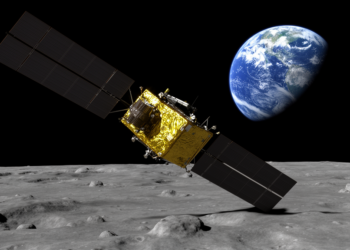
ESA's JUICE spacecraft executed the first Lunar–Earth gravity assist in August 2024, using a Moon-then-Earth double flyby to boost its ...

A new Nature study suggests that butterfly wing patterns and flight dynamics combine to create illusory motion cues that may ...
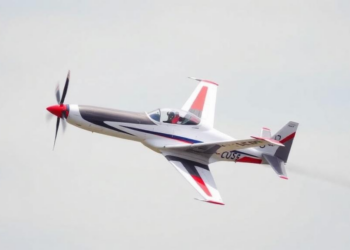
Researchers have derived a closed-form nonlinear model of longitudinal aircraft motion that, free of experimental data tables, recovers classic stability ...
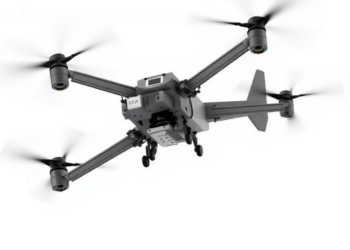
Researchers at Konkuk University have developed a unified rigid-body kinematics framework that models diverse rotor hinge types within a single ...
Researchers at IIT Madras used bifurcation and continuation analysis to map the stability boundaries of an air-breathing hypersonic vehicle and ...


Embark on a thrilling journey of discovery with Scienmag.com—your ultimate source for cutting-edge breakthroughs. Immerse yourself in a world where curiosity knows no limits and tomorrow’s possibilities become today’s reality!