


Machine learning separates catalyst and reaction controls in CO2 conversion
A new interpretable machine learning framework reveals that CO2 conversion is driven by thermokinetic factors, while hydrocarbon selectivity is controlled ...
A new interpretable machine learning framework reveals that CO2 conversion is driven by thermokinetic factors, while hydrocarbon selectivity is controlled ...

Chemists report that microwave-assisted heating over uncalcined bismuth molybdate catalysts doubles acrolein yield at 70 percent propene conversion compared to ...

A comprehensive review examines three-dimensional electrochemical water disinfection, detailing how polarized particle electrodes accelerate microbial inactivation through enhanced mass transfer ...

Researchers engineered catalytic microenvironments by pairing Co-ZSM-5 catalysts with Ca4MgO5 adsorbents to optimize integrated carbon dioxide capture and ethane conversion ...

Researchers have developed a rigorous algorithm demonstrating that third-order singularly perturbed equations exhibit simultaneous first-order boundary jumps at both domain ...

Tuning temperature, pressure and a small potassium dose allowed a cobalt-titania catalyst to convert 30.8 percent of CO2 with an ...
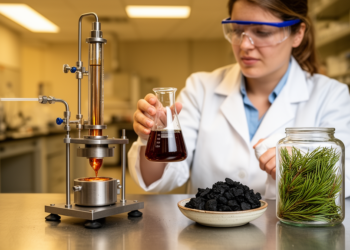
Researchers optimized bench-scale pyrolysis of Himalayan pine needles, producing bio-oil and carbon-rich biochar at a 500-gram loading far larger than ...
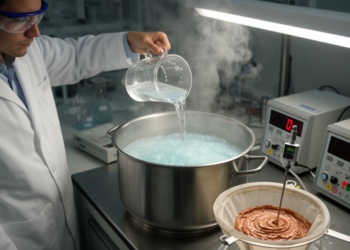
A study in Catalysis Letters finds that the temperature of co-precipitation controls precursor phases, copper dispersion and Cu-ZnO interactions in ...
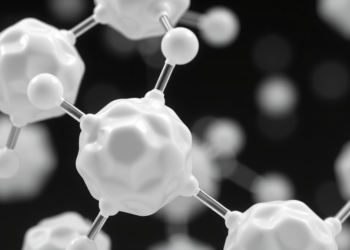
Researchers at Shihezi University report that hollow spherical alumina catalysts achieve complete conversion of dimethyl oxalate to diethyl oxalate, outperforming ...


Embark on a thrilling journey of discovery with Scienmag.com—your ultimate source for cutting-edge breakthroughs. Immerse yourself in a world where curiosity knows no limits and tomorrow’s possibilities become today’s reality!