


Molybdenum Interlayer Cuts Residual Stress and Boosts Strength in Brazed B4C-TC4 Joints
A target-oriented screening framework selected molybdenum as an optimal interlayer, reducing residual stress and increasing B4C/TC4 brazed joint shear strength.
A target-oriented screening framework selected molybdenum as an optimal interlayer, reducing residual stress and increasing B4C/TC4 brazed joint shear strength.

Ultrathin MXene nanoflakes assembled within polyamide 6 create robust composite films with enhanced tensile strength, high toughness, and reduced gas ...

Simulations demonstrate that geosynthetic-encased stone columns reduce earthquake-induced lateral ground deformation by 73 percent while lowering excess pore water pressures ...

A comparative analysis reveals that non-intrusive convolutional autoencoders capture nonlinear mechanical strains in metal additive manufacturing more accurately than traditional ...

A finite element simulation demonstrates that a curved frog-arm MEMS capacitive pressure sensor significantly improves sensitivity and linearity for intracranial ...

Mechanical roll hardening of 30CrMoA gear journal shafts creates an intense subsurface compressive stress field that peaks at a depth ...

A study in the Journal of Materials Science demonstrates that artificial neural network models outperform modified constitutive models in predicting ...

A two-stage statistical reconstruction method combining Cellular Automata and Monte Carlo techniques converts 2D microscopy data of anisotropic copper–tungsten composites ...

Field tests and LS-DYNA simulations show valley topography, not just charge weight and distance, controls how quarry blasting vibrations reach ...
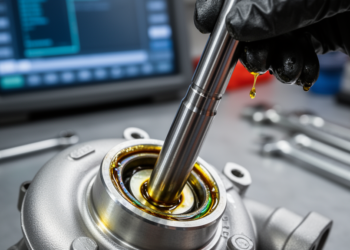
Simulations and tests show that widening a turbocharger floating ring bearing's outer oil film clearance from 0.030 mm to 0.036 ...


Embark on a thrilling journey of discovery with Scienmag.com—your ultimate source for cutting-edge breakthroughs. Immerse yourself in a world where curiosity knows no limits and tomorrow’s possibilities become today’s reality!