

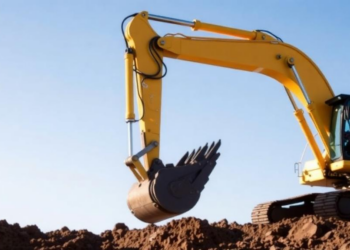
Real Digging Data Reveals How Excavator Arms Really Take the Strain
Researchers combined field-measured digging trajectories with three competing load models to show how excavator booms and sticks respond under real ...
Researchers combined field-measured digging trajectories with three competing load models to show how excavator booms and sticks respond under real ...

George Mason University's Cing-Dao Kan has received $1.43 million from the Federal Highway Administration to develop and test anti-ram perimeter ...

Researchers have released openCFS, a fully open-source finite-element package that couples electromagnetics, acoustics, mechanics, heat, and flow for advanced multiphysics ...

Engineers in Uganda have designed and simulated a two-axis sliding robotic system that charges scrap into electric induction furnaces at ...

Researchers have designed an architected thermoplastic polyurethane interlayer that lets aluminium pipe-in-pipe systems carry heavy loads while suppressing vibration through ...

A new 200,000-question benchmark from Carnegie Mellon University reveals that leading vision-language models perform at random chance when interpreting engineering ...
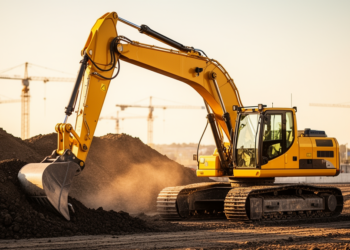
A collaborative optimization method that jointly tunes mechanism geometry and structural plate thickness has increased a 20-ton excavator's digging force ...
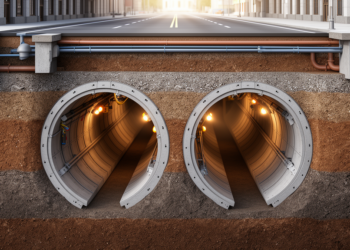
A validated parametric study of nearly 400 finite element models based on Iran's Shiraz Metro Line 1 reveals that tunnel ...

Researchers at the Moscow Aviation Institute and UMATEX have combined cyclic compression experiments with theoretical and numerical modeling to predict ...

Researchers trained XGBoost machine learning models on automated finite element simulations to predict how special threaded connections respond to combined ...


Embark on a thrilling journey of discovery with Scienmag.com—your ultimate source for cutting-edge breakthroughs. Immerse yourself in a world where curiosity knows no limits and tomorrow’s possibilities become today’s reality!