

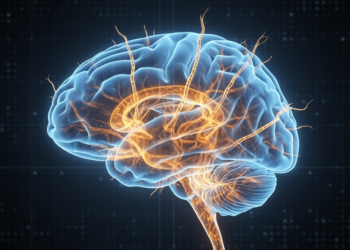
AI Shows Promise for Multiple Sclerosis Diagnosis, Review Finds Validation Gaps
A systematic review of 26 studies finds AI models diagnosing multiple sclerosis with over 95 percent accuracy in some cases, ...
A systematic review of 26 studies finds AI models diagnosing multiple sclerosis with over 95 percent accuracy in some cases, ...

Italian researchers have proposed OBESI-NET, a conceptual national AI-supported ecosystem for obesity surveillance and precision medicine that has not yet ...

A new framework called OceanWeave combines Ocean Protocol data markets, sharded compute-to-data consensus, and encrypted federated learning, reporting 3,200 TPS ...

Researchers propose CROG and CLIG, two aggregation algorithms that weight client updates by Euclidean gradient distances to stabilize federated learning ...

A new EU-focused analysis argues that federated learning reduces some data exposure risks but cannot by itself guarantee privacy or ...

A new personalized federated learning framework uses Transformer-based dynamic aggregation and adaptive regularization to improve colorectal cancer CT image classification ...

A simulated federated learning framework combines carbon-budgeted client selection, blockchain auditing, and gradient-boosting ensembles for cardiovascular prediction.
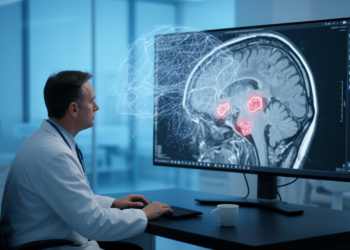
A systematic review finds hybrid CNN-transformer models lead stroke lesion analysis, but explainable AI appears in only 11 percent of ...

A systematic review finds that vision-based touchless gesture recognition systems, despite laboratory accuracies above 95%, lose 1 to 23 percentage ...

The DIGITAfrica project has published a blueprint-based methodology and deployment roadmap for a federated pan-African research infrastructure in digital sciences, ...


Embark on a thrilling journey of discovery with Scienmag.com—your ultimate source for cutting-edge breakthroughs. Immerse yourself in a world where curiosity knows no limits and tomorrow’s possibilities become today’s reality!