

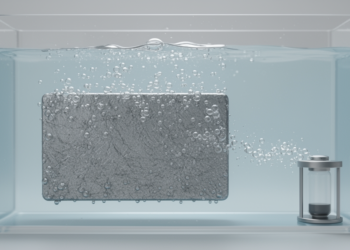
Zinc Chemistry Breakthrough Turns Metal into a Reusable Hydrogen Battery
Researchers have used machine learning to discover that lactate ligands unlock reversible zinc oxidation, enabling a safe, circuit-free carrier that ...
Researchers have used machine learning to discover that lactate ligands unlock reversible zinc oxidation, enabling a safe, circuit-free carrier that ...
The pursuit of practical carbon-neutral technologies has pushed researchers to explore catalysts that can transform carbon dioxide into liquid products ...

A new review details how tunable porous and conjugated polymers are challenging platinum catalysts in electrochemical hydrogen production, with some ...
Researchers have created an atomically ordered CuAuZn2 intermetallic catalyst whose Cu–Zn and Au–Zn dual atomic pairs synchronously reduce nitrate and ...
Monash University researchers have developed lithium-alloying gallium-based cathodes that overcome the intrinsic energy-efficiency limit of lithium-mediated electrochemical ammonia synthesis, achieving ...
A new review in Environmental Surfaces and Interfaces surveys how abundant, inexpensive cobalt-based electrocatalysts can convert nitrate pollution into ammonia ...
Korean researchers used laser ablation to transform platinum-coated copper electrodes from hydrogen producers into selective catalysts for ethylene, ethanol, and ...
A controlled benchmarking study finds that graphite and stainless steel outperform platinum for making sodium hypochlorite disinfectant from salt water, ...
Yale chemists have developed a two-step electrosynthesis that converts carbon dioxide, nitrite and aromatic aldehydes into valuable arylglycine amino acids ...
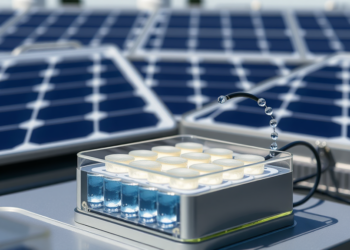
A new review in Ionics details how photoelectrochemical systems can convert carbon dioxide into methanol with record efficiencies, while identifying ...


Embark on a thrilling journey of discovery with Scienmag.com—your ultimate source for cutting-edge breakthroughs. Immerse yourself in a world where curiosity knows no limits and tomorrow’s possibilities become today’s reality!