

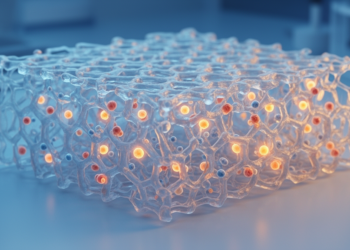
Biomaterials That Talk to the Immune System Are Reshaping Immunotherapy
A new review maps how inorganic nanoparticles, polymers, DNA nanostructures, and cell-derived vesicles are being engineered to actively reprogram the ...
A new review maps how inorganic nanoparticles, polymers, DNA nanostructures, and cell-derived vesicles are being engineered to actively reprogram the ...

Plasma-derived small extracellular vesicles from head and neck cancer patients suppress T-cell proliferation, trigger apoptosis, and rewire immune checkpoint expression ...
A new review in Molecular Cancer explains how tumor-derived exosomes act as mobile signaling hubs that spread immune suppression, drive ...
A new in vitro study reports that mesenchymal stem cell-derived extracellular vesicles reduced Th1 cell frequency, STAT1 expression, and inflammatory ...
A new review in Medical Oncology maps how the tumor microenvironment can either amplify or suppress ferroptosis, the iron-dependent cell ...
New research reveals that the nutrient sensor CPT1C protects hypothalamic neurons by restraining the BMP-hydrolyzing enzyme ABHD6, preserving the endolysosomal ...
A new engineered exosome platform carrying the transcription factor Meis1 and curcumin reduced inflammation, oxidative stress and apoptosis in models ...
A new review in Materials Today Bio explains how 3D bioprinting can actively orchestrate immune responses, rather than suppress them, ...
A new review details how nanoparticles disguised with red blood cell membranes, exosomes, and synthetic coatings, loaded with personalized neoantigens, ...
Researchers at Yeditepe University report that kale-derived exosome-like nanovesicles combined with the dual PI3K/mTOR inhibitor dactolisib trigger apoptosis and alter ...

Embark on a thrilling journey of discovery with Scienmag.com—your ultimate source for cutting-edge breakthroughs. Immerse yourself in a world where curiosity knows no limits and tomorrow’s possibilities become today’s reality!