


Hardware-Aware Edge AI Chip Framework Cuts IoT Inference Latency and Energy Use
Researchers developed HARE-EdgeChip, an adaptive edge artificial intelligence framework that dynamically routes sensor workloads across three inference paths to cut ...
Researchers developed HARE-EdgeChip, an adaptive edge artificial intelligence framework that dynamically routes sensor workloads across three inference paths to cut ...

Researchers have demonstrated a scalable optical learning machine that pairs a 41-million-parameter passive metasurface with a compact digital backend to ...

A systematic review of object detection methods reveals that single-stage neural networks and hardware-mapped handcrafted descriptors provide the highest operational ...

A new Born-rule physics-informed spiking neural network embeds finite-shot noise directly into network dynamics, reducing quantum state tomography inference energy ...

A systematic PRISMA review reveals that operational deployment decisions like geographic routing and carbon-aware scheduling cut AI emissions far more ...
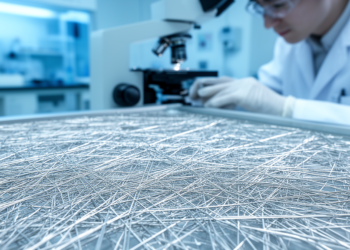
A Nature Reviews Physics review co-authored by UCLA researchers describes computing platforms in which self-organizing nanowire and nanoparticle networks physically ...
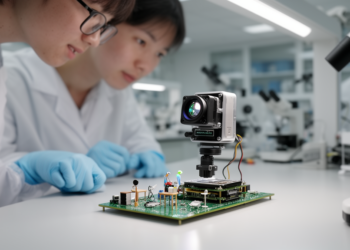
A reconfigurable transistor and neural-network-in-logic architecture reduced the hardware needed for handwritten-digit recognition in simulation and produced large estimated energy ...
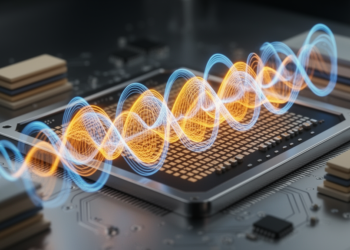
A University of Michigan-led team is developing a multiferroic M3BOLT device that uses magnetic and sound waves to represent information, ...
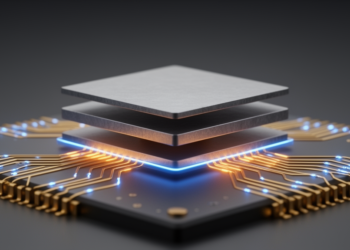
Researchers at the University of Edinburgh have developed an adiabatic capacitive neuron that recycles electrical charge to cut artificial neural ...
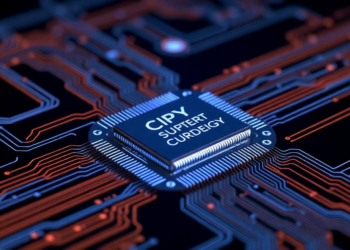
Researchers have demonstrated a photonic chip that trains itself on the hardware using on-chip holography to compute physical gradients, achieving ...


Embark on a thrilling journey of discovery with Scienmag.com—your ultimate source for cutting-edge breakthroughs. Immerse yourself in a world where curiosity knows no limits and tomorrow’s possibilities become today’s reality!