

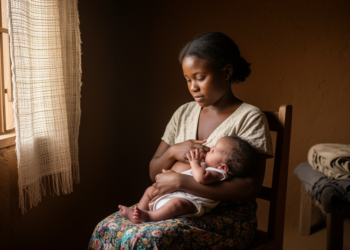
High-risk humanitarian countries show lower exclusive breastfeeding rates
An exploratory cross-national study finds that countries with higher standing humanitarian risk have lower exclusive breastfeeding rates even after adjusting ...
An exploratory cross-national study finds that countries with higher standing humanitarian risk have lower exclusive breastfeeding rates even after adjusting ...

A new narrative review proposes a three-question airway safety frame and a first-60-second sequence for managing pediatric tracheostomy emergencies in ...
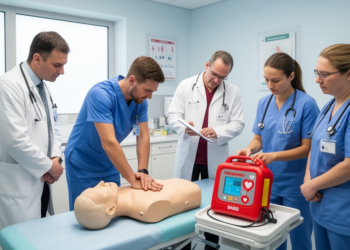
A cross-sectional survey of 177 primary health care practices in Poznań and Poznań County, Poland, found that fewer than half ...

A new review argues the European Health Data Space could transform Europe's fragmented health records into a federated early-warning system ...

A new Frontiers collection reveals that nuclear emergency preparedness hinges on integrating models, cybersecurity, institutions, and citizens, not on technology ...

A new commentary argues that crisis communication should be rebuilt as institutionalized public health diplomacy, with transparent decision frameworks, reassessment ...

MIT-led researchers developed a machine-learning postprocessing technique that doubles forecast accuracy in the two-to-six-week subseasonal range and beat climatological averages ...

Researchers have developed an improved fuzzy Bayesian network that quantifies the likelihood of major urban public health emergencies, using the ...

A qualitative study of 15 disaster management training organizers reveals superficial, unstandardized monitoring and evaluation practices that may leave responders ...
A scoping review of 19 studies finds that the COVID-19 pandemic both disrupted and catalyzed postgraduate psychiatric education, accelerating virtual ...


Embark on a thrilling journey of discovery with Scienmag.com—your ultimate source for cutting-edge breakthroughs. Immerse yourself in a world where curiosity knows no limits and tomorrow’s possibilities become today’s reality!