


Catalysts That Heal Themselves Could End Costly Industrial Deactivation
A new review details how self-regenerating catalysts that reversibly restructure their active metals could dramatically extend industrial catalyst lifetimes.
A new review details how self-regenerating catalysts that reversibly restructure their active metals could dramatically extend industrial catalyst lifetimes.
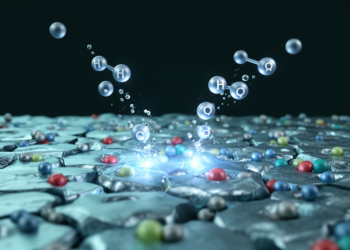
A defect-and-entropy co-engineered high-entropy layered double hydroxide cuts the oxygen evolution overpotential to 256 mV at 10 mA/cm2 and runs ...
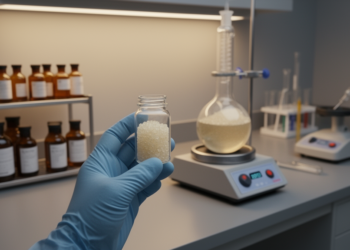
A new Frontiers in Chemistry review surveys ruthenium-catalyzed C–H activation, annulation, and hydrogen-borrowing strategies for building bioactive heterocycles.

A reticular coordination strategy anchors single platinum atoms onto cerium-oxo clusters, yielding a 14.9 wt% atomically dispersed catalyst that resists ...
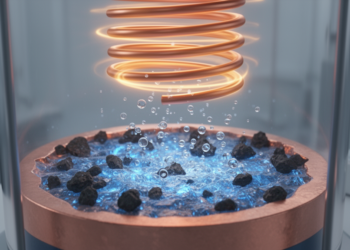
An alternating magnetic field locally heats ferromagnetic high-entropy alloy catalysts, suppressing carbonate precipitation and extending CO2 electroreduction durability beyond 200 ...
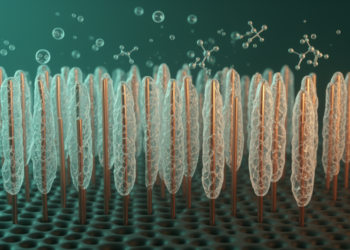
A copper nanowire catalyst coated with a covalent organic framework achieved 77 percent Faradaic efficiency for multi-carbon products in CO2 ...
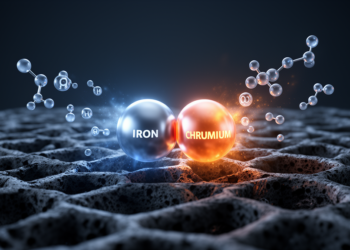
A neighboring iron-chromium dual-atom catalyst raises the intrinsic activity of iron sites 4.6-fold while suppressing the reactive oxygen species that ...
A hydrothermally synthesized CdS-doped Ti3C2Tx MXene composite with 1 wt% CdS showed the best electrocatalytic hydrogen evolution performance in acidic ...
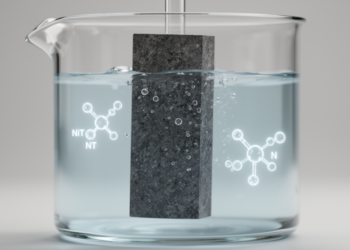
A laboratory study found that boron-doped diamond cathodes outperformed copper in nitrate electroreduction at higher current densities while keeping nitrite ...
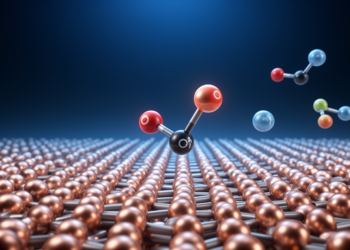
A new review outlines how atomically precise catalyst interfaces, from dopants and vacancies to curved surfaces and local electric fields, ...


Embark on a thrilling journey of discovery with Scienmag.com—your ultimate source for cutting-edge breakthroughs. Immerse yourself in a world where curiosity knows no limits and tomorrow’s possibilities become today’s reality!