


Study Finds Indian Research Isolates Slow Hazards From Core Disaster Frameworks
A bibliometric study of Indian academic publications from 2015 to 2025 demonstrates that slow-onset hazards are treated as isolated environmental ...
A bibliometric study of Indian academic publications from 2015 to 2025 demonstrates that slow-onset hazards are treated as isolated environmental ...

A comparative evaluation of eight fuzzy logic operators in Koya, Iraq, reveals that conservative models achieve 95 percent predictive accuracy ...

A cross-sectional study of 384 adult smartphone owners in the Accra Metropolitan Area reveals that personal social integration, active online ...
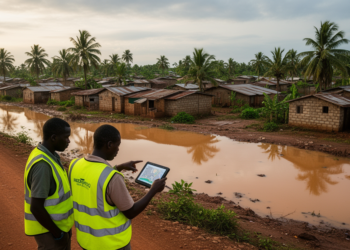
A geospatial study in Suleja, Nigeria, integrates SAR flood mapping and multi-criteria modeling to reveal that 17.88% of the area ...

A comprehensive multi-institutional synthesis examines climate risks, permafrost thaw, food systems, and coastal vulnerabilities to establish integrated frameworks for community ...

HazMiner applied multilingual natural language processing to over six million global news articles from 2017 through 2024, extracting 24,407 geo-hydrological ...

A systematic assessment of forty-five rainfall-induced landslide warning systems revealed that while twenty-seven are operational across nineteen countries, severe deficits ...

A new study maps climate variability and thunderstorm dynamics in Bangladesh's Haor Basin, revealing district-specific risks that inform targeted adaptation ...

A spatial disaster assessment in Malaysia's Langat Basin reveals that combining physical landslide susceptibility with demographic and socioeconomic indicators significantly ...

A study integrating satellite fire records with census data reveals that social vulnerability and institutional capacity dictate provincial wildfire risk ...


Embark on a thrilling journey of discovery with Scienmag.com—your ultimate source for cutting-edge breakthroughs. Immerse yourself in a world where curiosity knows no limits and tomorrow’s possibilities become today’s reality!