


Big Data’s Big Trap: Why Huge Datasets Can Be Precisely Wrong
A new PLOS Medicine guidance article warns that large biomedical datasets inflate statistical significance while leaving systematic bias intact, and ...
A new PLOS Medicine guidance article warns that large biomedical datasets inflate statistical significance while leaving systematic bias intact, and ...

Researchers have developed an interpolation-based method that generates synthetic MRI training data between age- and gender-matched participants from different scanners, ...

A study of N3C data finds that common inclusion criteria such as requiring prior medical history or COVID-19 hospitalization substantially ...

A new study proposes a regional roadmap to harmonize small-scale fisheries data across the Western Indian Ocean, where fragmented monitoring ...

An open-source workflow standardized 98,020 global first records of non-native species while preserving temporal uncertainty, geographic coverage and taxonomic limitations.
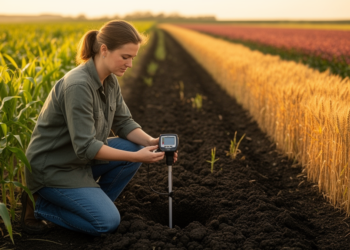
A new architecture-diverse TabNet ensemble classifies seven crop types from harmonized multi-source soil data with 90.5 percent accuracy, outperforming XGBoost ...
A new ontology-guided FAIR resource called MAOMAO harmonizes peptide toxicity annotations from 56 sources into a unified, evidence-aware dataset spanning ...


Embark on a thrilling journey of discovery with Scienmag.com—your ultimate source for cutting-edge breakthroughs. Immerse yourself in a world where curiosity knows no limits and tomorrow’s possibilities become today’s reality!