

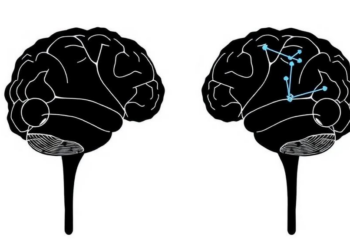
How Threat Rewires the Brain’s Decision Math in Approach-Avoidance Choices
A new computational study shows that humans adapt to threatening decision environments by reweighting reward and threat information and aligning ...
A new computational study shows that humans adapt to threatening decision environments by reweighting reward and threat information and aligning ...

A new Johns Hopkins study shows that simplified actuator disk models reproduce the power and thrust fluctuation statistics of far ...

A Nature Communications study shows that as environmental randomness increases through unreliability, volatility, or reduced controllability, people reduce planning effort ...

Technion researchers show that when multiple evolutionary paths offer equal fitness, populations deterministically drift toward flatter, more robust regions of ...

The open-source software golgi automates the full pipeline from segmented nerve images to fiber recruitment predictions, validated against commercial solvers ...

The University of Vermont has received up to $38 million from ARPA-H to build AI-powered digital twins that simulate critically ...

A new physiological model of human color vision explains why modern wide-gamut displays show different colors to different viewers and ...

A new review explains why the heat-sink effect and tumor biology undermine radiofrequency ablation for large perivascular liver cancers and ...
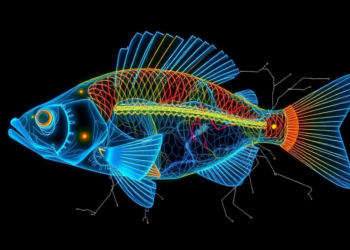
A complete wiring diagram of an electric fish cerebellum-like circuit reveals how structured synaptic connectivity enables fast, accurate and continually ...

A new study in National Science Review reveals that localized oscillations in networked reaction-diffusion systems can emerge when a Hopf ...


Embark on a thrilling journey of discovery with Scienmag.com—your ultimate source for cutting-edge breakthroughs. Immerse yourself in a world where curiosity knows no limits and tomorrow’s possibilities become today’s reality!