

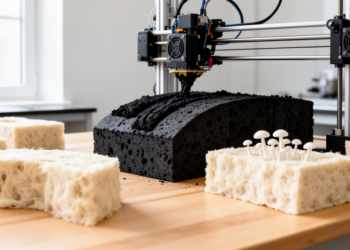
Living Bricks: 3D Printed Biochar-Mycelium Composites Grow Into Building Components
An experimental study reports 3D printed biochar-mycelium composites with reduced vertical shrinkage of 3 to 5 percent and a bio-welded ...
An experimental study reports 3D printed biochar-mycelium composites with reduced vertical shrinkage of 3 to 5 percent and a bio-welded ...
A systematic study of thirteen styrene-acrylate latex dispersions at 2 weight percent dosage finds mostly small strength reductions in cement ...

A statistical and machine learning study of 464 experimental datasets yields an empirical model estimating how much compressive strength fire-damaged ...
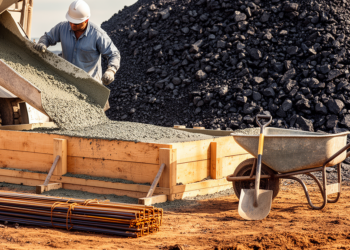
A one-part alkali-activated concrete in which coal mine overburden fully replaces natural sand reached 48.99 MPa at 28 days while ...
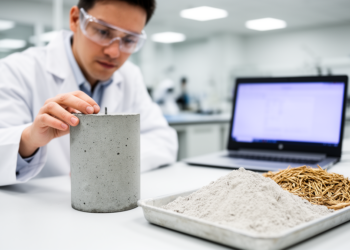
A machine-learning framework trained on published experimental data predicts the compressive strength of rice husk ash concrete, with a support ...

A laboratory study finds that citric acid, tartaric acid and sucrose affect the setting and six-month strength of clay–gypsum and ...
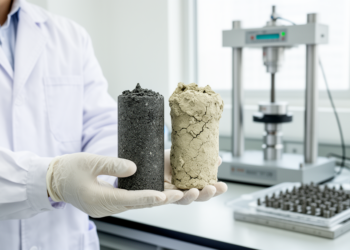
A one-part slag-fly ash geopolymer binder stabilized Guangzhou soft clay with higher strength and better durability than cement in laboratory ...
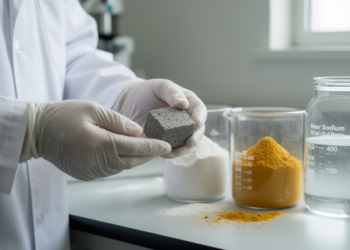
A Kenyan laboratory study found that mixing lime mortars containing rice husk ash or corn cob ash with a 0.5 ...
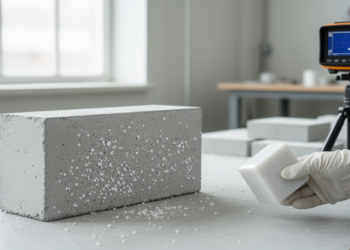
A new study reports that silica-fume-modified expanded-perlite mortars achieved thermal conductivity as low as 0.206 W/m K and compressive strength ...
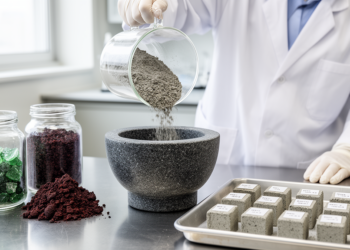
A laboratory study of mortars blended with Ethiopian scoria powder and waste glass powder found that 10–15% scoria replacement improved ...


Embark on a thrilling journey of discovery with Scienmag.com—your ultimate source for cutting-edge breakthroughs. Immerse yourself in a world where curiosity knows no limits and tomorrow’s possibilities become today’s reality!