


When Algorithms Set the Price, Equilibrium Becomes an Outcome Not an Assumption
A new dynamic framework argues that in markets run by learning algorithms, equilibrium emerges only as a possible outcome of ...
A new dynamic framework argues that in markets run by learning algorithms, equilibrium emerges only as a possible outcome of ...

A new theoretical framework argues that collapses in hospitals, minds, and democracies are driven not by triggering events but by ...

Researchers have introduced probability-turbulence divergence, a tunable instrument that generalizes many classical distance measures and makes comparisons of heavy-tailed type-probability ...

A new PLOS Complex Systems study shows that multi-scale local clustering in real interaction networks, absent from common synthetic models, ...

Researchers propose an Urban Generative Intelligence platform that grounds large language model agents in a simulated textual city to model ...
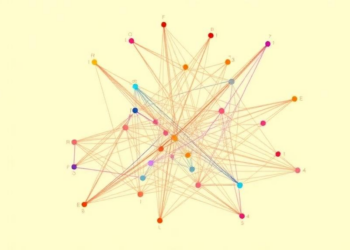
A new mathematical proof shows that the Pearson assortativity coefficient fails to measure connection preferences in heavy-tailed networks, prompting researchers ...

A network analysis of seven election cycles shows Democratic campaign contributions staying centralized while Republican giving dispersed into local clusters, ...

A new theoretical framework argues that many universal statistical laws of genomes, texts, cities, and software may arise from simple ...

A new modeling study shows that partisan polarization emerges from the combined and interchangeable effects of nationalized political signals and ...

Researchers have introduced the persistence partition, a non-parametric method using persistent homology to group network nodes in ways that conventional ...


Embark on a thrilling journey of discovery with Scienmag.com—your ultimate source for cutting-edge breakthroughs. Immerse yourself in a world where curiosity knows no limits and tomorrow’s possibilities become today’s reality!