


Machine learning separates catalyst and reaction controls in CO2 conversion
A new interpretable machine learning framework reveals that CO2 conversion is driven by thermokinetic factors, while hydrocarbon selectivity is controlled ...
A new interpretable machine learning framework reveals that CO2 conversion is driven by thermokinetic factors, while hydrocarbon selectivity is controlled ...

This review analyzes the advancements in heterogeneous ruthenium-based catalysts for the hydrogenation of carbon dioxide into formic acid, formaldehyde, and ...

Oxidized carbon nanotubes enhanced iron catalyst activity across all tested temperatures during carbon dioxide hydrogenation by confining nanoparticles within nanotube ...

Tuning temperature, pressure and a small potassium dose allowed a cobalt-titania catalyst to convert 30.8 percent of CO2 with an ...
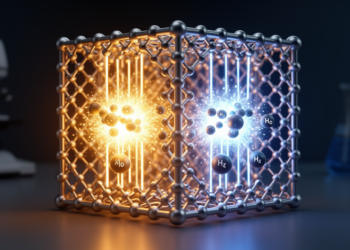
A new review details how dual-site catalysts and three-dimensional nanoreactors boost the activity, selectivity and stability of thermo-catalytic CO2 hydrogenation.
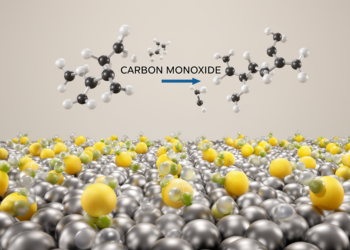
A citric-acid-assisted impregnation method produced a Co-SiO2 catalyst that kept cobalt in a stabilized CoO state and ran substantially longer ...
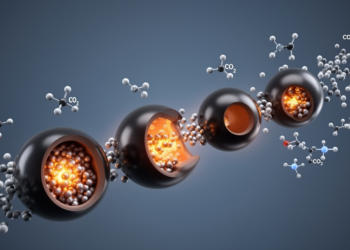
Carbon nanosphere-encapsulated iron–cobalt catalysts with a 1:2 iron-to-cobalt ratio showed improved CO2 conversion, C2–C4 olefin selectivity and 60-hour stability under ...

Researchers at the Indian Institute of Science built a machine learning framework mapping nearly 10,000 reactions in CO2 hydrogenation on ...


Embark on a thrilling journey of discovery with Scienmag.com—your ultimate source for cutting-edge breakthroughs. Immerse yourself in a world where curiosity knows no limits and tomorrow’s possibilities become today’s reality!