


Zirconium Dopants Prefer Cathode Particle Surfaces Over Bulk Lithium Nickel Oxide
Researchers established that zirconium incorporation into lithium nickel oxide cathodes preferentially concentrates at grain surfaces rather than the bulk crystal ...
Researchers established that zirconium incorporation into lithium nickel oxide cathodes preferentially concentrates at grain surfaces rather than the bulk crystal ...

Researchers developed an acetonitrile-based solvothermal synthesis method that suppresses crystal defects in manganese-based Prussian white cathodes, significantly improving rate capability ...

Researchers developed a silver nanoparticle and activated carbon composite cathode that achieved a 96 percent removal efficiency for nickel ions ...

Researchers engineered a polymer-coated, co-doped vanadium dioxide cathode that significantly enhances capacity and cycling durability in aqueous zinc-ion batteries.
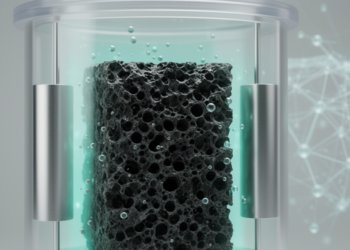
A machine learning model built on eight material descriptors predicted the specific capacity of nitrogen-doped porous carbon cathodes for zinc-ion ...

A LiMn0.7Fe0.3PO4/C/CNT composite cathode delivered 96.7 mAh g−1 at a 100C rate and retained 67.5% capacity after 1000 fast cycles.
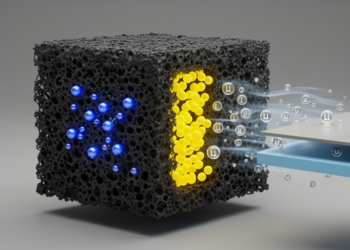
Researchers report a cobalt single-atom catalyst anchored on a three-dimensional nitrogen-doped porous carbon framework that serves as a sulfur host ...
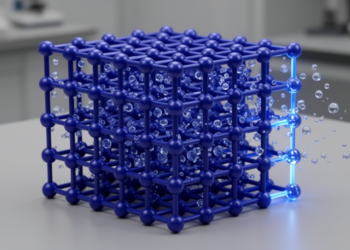
Researchers report that controlled dehydration of Prussian blue cathodes creates one-dimensional cyanide defects that enable adaptive water release during battery ...

A combined bulk-doping and surface-coating strategy raises capacity retention and the exothermic onset temperature of NCM811 cathodes in laboratory testing.

In a laboratory comparison of conductive additives for a P2-type sodium-ion battery cathode, carbon nanotubes reached electronic percolation at 1 ...


Embark on a thrilling journey of discovery with Scienmag.com—your ultimate source for cutting-edge breakthroughs. Immerse yourself in a world where curiosity knows no limits and tomorrow’s possibilities become today’s reality!