


Two Blood MicroRNAs Show Early Promise for Detecting Luminal Breast Cancer in Peruvian Women
In a small but technically careful study from Lima, Peru, researchers report that two microRNAs circulating in blood plasma, miR-486-3p ...
In a small but technically careful study from Lima, Peru, researchers report that two microRNAs circulating in blood plasma, miR-486-3p ...
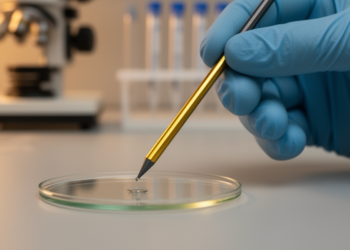
A receptor-free electrochemical sensor uses gold-thiol chemistry on pencil graphite electrodes to detect the breast cancer biomarker CA 15-3 at ...

A new mini-review in Frontiers in Imaging outlines how artificial intelligence can integrate mammography and MRI phenotypes with ctDNA genotypes ...

A comprehensive review finds confocal fluorescence microscopy can image fresh breast tissue at cellular resolution in minutes, with AI and ...
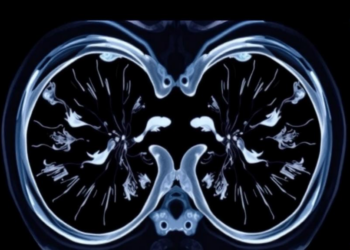
Breast-conserving surgery has become the standard of care for most women with early-stage breast cancer, offering survival rates equivalent to ...

Breast cancer remains the most common cancer affecting women worldwide, with more than 2.3 million women diagnosed every year and ...

For decades, women diagnosed with triple-negative breast cancer have faced one of the most demanding treatment journeys in oncology, typically ...
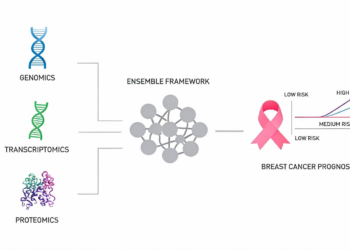
None The distinction between stacking and bagging, the two ensemble paradigms combined in this framework, helps explain why assigning them ...
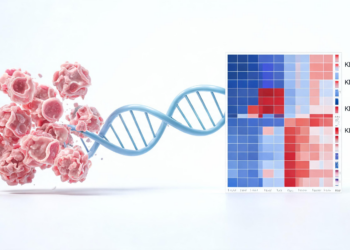
Breast cancer remains one of the most formidable challenges in modern oncology, claiming hundreds of thousands of lives globally each ...


Embark on a thrilling journey of discovery with Scienmag.com—your ultimate source for cutting-edge breakthroughs. Immerse yourself in a world where curiosity knows no limits and tomorrow’s possibilities become today’s reality!