

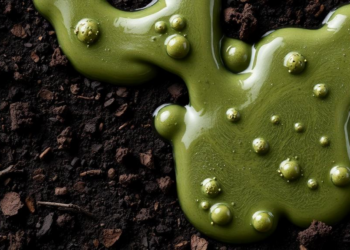
Microbial Slime Emerges as a Hidden Reservoir of Soil Carbon
A new isotope-tracing study finds that mucus-like microbial secretions contribute to stable mineral-associated soil carbon at rates rivaling dead microbial ...
A new isotope-tracing study finds that mucus-like microbial secretions contribute to stable mineral-associated soil carbon at rates rivaling dead microbial ...

A study of two Venice Lagoon salt marshes shows that sediment microbial communities remain taxonomically stable across a full summer ...
Laboratory infection experiments with two marine microalgae show that ribosomal RNA released into seawater can quantify virus-induced cell death in ...
A new in situ isotope study of eleven aquatic plant species shows that efficient gas transporters can oxidize up to ...
Researchers in Spain enriched a wastewater-fed stream with brewery-derived dissolved organic carbon and found that the addition shifted the reach ...
A laboratory simulation of Ukrainian battlefield soils shows that microbes accelerate the corrosion of exploded weapons residue, releasing pulses of ...
A twenty-year satellite analysis of more than 142,000 drought events reveals that rainfall and soil phosphorus jointly determine whether tropical ...
High-resolution isotope monitoring in a Chinese karst stream shows that submerged vegetation, not denitrification, drives the daily cycles of nitrogen ...
A new World View argues that the complex relationship between rock weathering and the carbon cycle demands broader research and ...
A synthesis of 181 studies shows that soil mineralogy, texture and land-use history strongly control how temperate soils release carbon ...

Embark on a thrilling journey of discovery with Scienmag.com—your ultimate source for cutting-edge breakthroughs. Immerse yourself in a world where curiosity knows no limits and tomorrow’s possibilities become today’s reality!