


Retaining Wall Study Shows Cost and Embodied Carbon Align Nearly Perfectly
A reliability-based optimization study reveals that retaining wall cost and embodied carbon align closely while surrogate models unexpectedly slow down ...
A reliability-based optimization study reveals that retaining wall cost and embodied carbon align closely while surrogate models unexpectedly slow down ...

Laboratory tests on scaled wind turbine foundations show that adding trapezoidal ribs increases bearing capacity by forty-one percent while reducing ...

Bridge pile bearing capacity responds nonlinearly to rising groundwater levels in land subsidence regions, according to a numerical simulation study ...

A deep learning model based on MIONet predicts strip foundation load-displacement curves and displacement fields in under three seconds with ...

A coupled numerical model finds hydrate dissociation cuts sediment bearing capacity by about 40 percent and shifts the wellhead, while ...
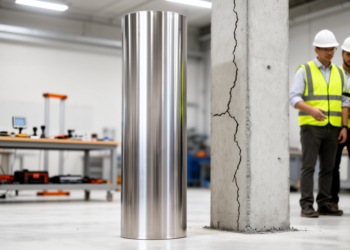
A new finite element study shows that design codes written for carbon steel can misjudge the strength of concrete-filled stainless ...

A field study on reclaimed island-reef foundations found that coarse coral-sand backfill and centroid densification together produced stronger and more ...
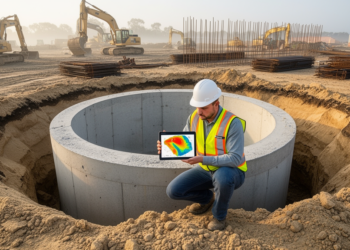
A simulation study reported machine-learning predictions of bearing-capacity and safety factors for ring foundations in spatially variable cohesive-frictional soils under ...
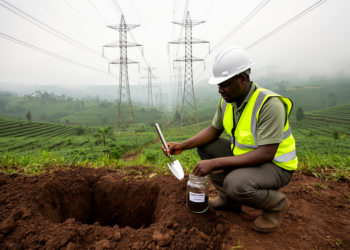
A first-of-its-kind comparison along Rwanda's Bugesera–Nyanza–Gisagara transmission line shows the Standard Penetration Test performs reliably in mineral soils but overestimates ...

New experiments show that 7075-T6 high-strength aluminum alloy gusset joints achieve steel-surpassing strength at one-third the weight, with a validated ...


Embark on a thrilling journey of discovery with Scienmag.com—your ultimate source for cutting-edge breakthroughs. Immerse yourself in a world where curiosity knows no limits and tomorrow’s possibilities become today’s reality!