


Model Grid Spacing Dictates Simulation Accuracy for Distinct Convective Storm Structures
Simulations of heavy rainfall systems reveal that back and side building convective lines demand significantly finer numerical grid spacing than ...
Simulations of heavy rainfall systems reveal that back and side building convective lines demand significantly finer numerical grid spacing than ...

Idealized numerical simulations demonstrate that atmospheric temperature lapse rates and lower-tropospheric moisture determine raindrop size distributions and rainfall intensities in ...

A multi-stage evaluation using SCADA data from the Westermost Rough and Anholt offshore wind farms revealed that wake-modelling software implementations ...

High-resolution large-eddy simulations constrained by aircraft observations show that mineral dust concentrations exceeding climatological values by one to two orders ...

A study evaluating Weather Research and Forecasting simulations against North Sea aircraft and tower measurements reveals that atmospheric stability, rather ...

Incorporating thermal inversion characteristics into daily PM2.5 prediction models for Southern California improved predictive performance, with the best-performing model achieving ...

A short-term cold-season monitoring campaign in San Juan, Argentina, shows that industrial and commercial zones carry the highest particulate levels ...

A modeling study finds that identical Asian sulfate aerosol forcing suppresses summer extreme precipitation more strongly over northern India under ...
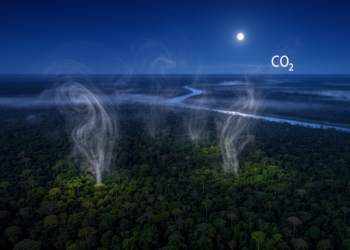
Two weeks of dry-season observations above and within an Amazon rainforest canopy showed that only about 6% of nocturnal profiles ...

Simulations driven by Oklahoma wind farm measurements reveal that turbine wakes shift from coherent swaying to chaotic multi-mode turbulence within ...


Embark on a thrilling journey of discovery with Scienmag.com—your ultimate source for cutting-edge breakthroughs. Immerse yourself in a world where curiosity knows no limits and tomorrow’s possibilities become today’s reality!