


Stress in childhood linked to later binge eating, but brain networks may not explain why
Greater exposure to negative life events at age nine or ten predicted more binge eating symptoms two years later in ...
Greater exposure to negative life events at age nine or ten predicted more binge eating symptoms two years later in ...

A structured narrative review finds peripheral inflammation is a context-dependent contributor linking childhood trauma to selected reward and threat circuits, ...
A preregistered meta-analysis of 40 fMRI datasets in 2,175 people shows that questionnaires, task ratings and amygdala down-regulation do not ...
An international fMRI analysis of 2,175 people across 40 studies found that prefrontal cortex activity during cognitive reappraisal does not ...
Direct recordings in neurosurgical patients show that category-selective amygdala neurons fire earlier and more strongly for images people later remember, ...
A mouse study found that chronic stress shortened primary cilia on amygdala astrocytes, while restoring the structures improved some stress-related ...
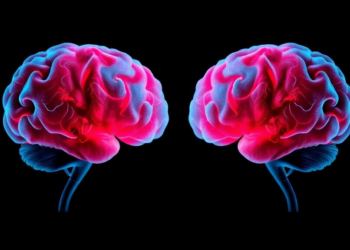
Intracranial recordings from patient pairs playing a real-time prisoner's dilemma reveal that mutual cooperation depends on amygdala-mediated alignment of neural ...

For decades, the amygdala has been cast as the villain of borderline personality disorder. This almond-shaped cluster of neurons, buried ...

Advanced MRI techniques revealed bilateral brain inflammation in a systemic sclerosis patient whose conventional scans showed only subtle unilateral changes, ...
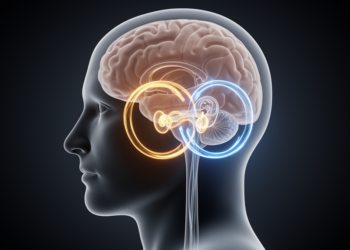
A new review proposes that chronic dizziness arises when neural sensitization and psychological sensitization form a mutually reinforcing loop after ...


Embark on a thrilling journey of discovery with Scienmag.com—your ultimate source for cutting-edge breakthroughs. Immerse yourself in a world where curiosity knows no limits and tomorrow’s possibilities become today’s reality!