

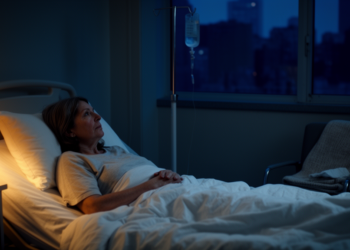
Why Sleepless Nights May Matter More Than We Thought in Advanced Cancer Care
A new correspondence in Supportive Care in Cancer argues that sleep disturbance in palliative care patients deserves sharper clinical attention, ...
A new correspondence in Supportive Care in Cancer argues that sleep disturbance in palliative care patients deserves sharper clinical attention, ...

A Belgian qualitative interview study of thirty patients, physicians, and physical therapists reveals that misaligned knowledge, expectations, and communication across ...
A retrospective Italian study finds that intensive antibiotic treatment of pneumonia in a frail advanced-cancer population led to clinical resolution ...
A qualitative study of 24 nurses in Saudi Arabia reveals how dignity preservation, holistic care, and emotional strain define end-of-life ...
A three-round European e-Delphi study has produced seventy consensus statements defining the role of specialist palliative care services for people ...
A new commentary in Supportive Care in Cancer argues that fear of cancer recurrence and fear of progression may be ...
A multicenter study of 1,546 advanced cancer patients in Beijing found that 65.1 percent developed anemia during third-line or later ...
A large Brazilian study of 527 palliative care patients found that older age and reduced Karnofsky performance status independently predict ...
A survey of 120 Malaysian patients with advanced cancer found that over half remained sexually active, yet gender-specific symptoms and ...
A large US study finds that clinically defined sarcopenia more than doubles the risk of severe nonhematologic toxicity and one-year ...

Embark on a thrilling journey of discovery with Scienmag.com—your ultimate source for cutting-edge breakthroughs. Immerse yourself in a world where curiosity knows no limits and tomorrow’s possibilities become today’s reality!