

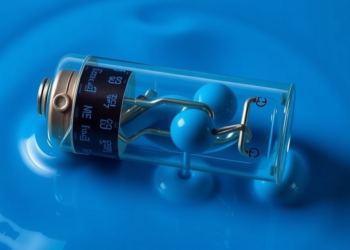
Recycled Battery Cathode Material Pulls Toxic Blue Dye from Water Without Any Redox Chemistry
Researchers in Brazil have shown that LiMn2O4 recovered from spent lithium-ion phone batteries acts as a stable, highly reusable adsorbent ...
Researchers in Brazil have shown that LiMn2O4 recovered from spent lithium-ion phone batteries acts as a stable, highly reusable adsorbent ...

Researchers in Saudi Arabia have created carbon-metal borate-oxide nanocomposites that remove up to 96 percent of Victoria Blue B dye ...
Researchers have created a nanomaterial-based sensor that detects Eosin Yellow dye at nanomolar levels while a nickel-copper layered double hydroxide ...
A new magnesium oxide-reinforced sulfonated chitosan hydrogel removes toxic crystal violet dye from water with a record capacity of 822 ...
A special issue of Environmental Science and Pollution Research compiled from the 15th Brazilian Meeting on Adsorption showcases waste-derived adsorbents, ...
Researchers converted spent tea leaves into a nitrogen- and iron-doped magnetic biochar that removed up to 96.90 percent of hexavalent ...

Embark on a thrilling journey of discovery with Scienmag.com—your ultimate source for cutting-edge breakthroughs. Immerse yourself in a world where curiosity knows no limits and tomorrow’s possibilities become today’s reality!