

The Hidden Toxicity in Our Clothes: Why Synthetic Textile Dyes Refuse to Break Down
A new review in Environmental Science and Pollution Research synthesizes recent evidence showing that synthetic textile dyes persist in water, ...
A new review in Environmental Science and Pollution Research synthesizes recent evidence showing that synthetic textile dyes persist in water, ...

A new review maps how biochar waste can be converted into green activated carbon whose activation pathway, pore structure, and ...

New research from Banaras Hindu University shows that clay-rich alluvial soils bind arsenate most effectively, but phosphate ions compete fiercely ...

A new biopolymer composite membrane removes over 91% of carcinogenic chromate ions from water within 40 minutes and can be ...
Researchers in Iran have created electrospun nanofibers of polyvinyl alcohol, gum arabic, and green carbon dots that efficiently and repeatedly ...
Researchers in India have created a pH-responsive hydrogel from pullulan, carboxymethyl cellulose, and montmorillonite clay that removes over 96 percent ...
Researchers have synthesized a zinc oxide-graphene oxide nanocomposite that removes up to 97 percent of methylene blue and 94 percent ...
Researchers transformed used coffee grounds into water-vapor-activated biochars that adsorb chromium(III) from water, with surface chemistry and activation time proving ...
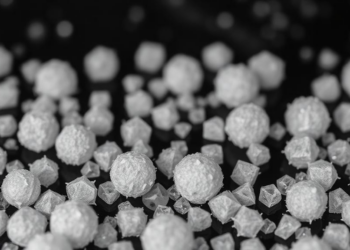
Researchers at Northeastern University have developed PEG-200-modified, glutaraldehyde-crosslinked chitosan microspheres that recover scandium(III) from acidic aqueous solutions with a maximum ...

Researchers have developed a core-shell molecularly imprinted polymer for solid-phase extraction that detects bisphenol-A in environmental waters at sub-nanogram-per-liter levels ...


Embark on a thrilling journey of discovery with Scienmag.com—your ultimate source for cutting-edge breakthroughs. Immerse yourself in a world where curiosity knows no limits and tomorrow’s possibilities become today’s reality!