

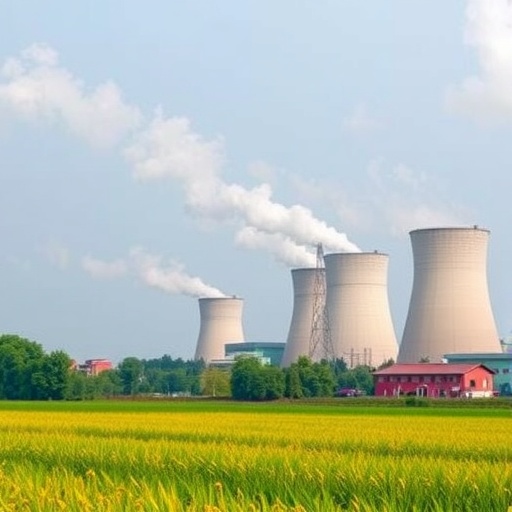
As the world accelerates its shift towards cleaner energy systems, the environmental narrative often highlights reductions in greenhouse gas emissions and improvements in air quality. Yet, a recent study published in Communications Earth & Environment by Yang, Zhang, Cao, and colleagues presents a critical, less acknowledged dimension of this transition: the rising challenge of atmospheric heavy metal pollution in rapidly urbanizing Chinese cities. This research uncovers the paradox that while clean energy technologies significantly curb carbon footprints, they do not automatically resolve—or may even exacerbate—health-threatening heavy metal contaminants in the atmosphere.
China’s clean energy revolution is undoubtedly a benchmark for global sustainability efforts. With massive investments in wind, solar, and electric vehicle technologies, cities across China are at the forefront of this paradigm shift, promising a future less reliant on fossil fuels. However, this study draws attention to the unintended consequences of such transitions. Despite reductions in traditional pollutants like sulfur dioxide and nitrogen oxides linked to fossil fuel combustion, atmospheric concentrations of heavy metals such as lead, cadmium, arsenic, and mercury remain stubbornly high. These metals pose severe risks to human health, causing respiratory problems, neurological damage, and an elevated risk of cancer.
The researchers emphasize that the presence of heavy metals in urban air is intricately connected to a variety of sources. Industrial activities, including metal smelting, coal combustion, non-ferrous metal processing, and waste incineration, continue to contribute, despite regulatory efforts. Moreover, the adoption of certain clean energy technologies can inadvertently increase emissions of heavy metals. For instance, manufacturing and disposal processes associated with solar panels, batteries, and electric vehicles often involve materials containing toxic metals. This lifecycle issue is rarely accounted for in conventional clean energy assessments.
By employing sophisticated atmospheric modeling combined with ground-level monitoring data from multiple Chinese metropolitan hotspots, Yang and colleagues identified spatial and temporal trends in heavy metal distributions. The data revealed that while policies targeting air quality have reduced some pollutants, localized hotspots of heavy metal pollution persist, frequently near industrial zones and even residential areas affected by fugitive dust and traffic emissions. This highlights the complexity of atmospheric heavy metal dynamics, driven by vehicle brakes and tires, road dust, and other urban sources.
This turbulence in pollution patterns presents a significant obstacle to public health strategies. Heavy metals are characterized by their bioaccumulative properties, meaning that even low concentrations can build up in biological organisms over time, severely affecting vulnerable populations such as children and the elderly. The study points out that the health burden of heavy metal exposure remains underestimated in many urban assessments, partly due to gaps in continuous monitoring and integrated environmental health evaluation frameworks.
The authors underline the important role of regulatory frameworks tailored specifically towards controlling heavy metal emissions in urban air. Traditional clean-air policies focused predominantly on reducing particulate matter and gaseous pollutants but have not sufficiently targeted airborne toxic metals. The study argues for integrated policy approaches that marry clean energy transitions with heavy metal emission controls, including stricter industrial emission standards, safer waste management, and enhanced urban planning to reduce residential exposure.
Particularly noteworthy is the discussion on electric vehicles (EVs), often heralded as a panacea for urban air pollution. The research acknowledges the benefits of EV-related emission reductions from exhausts but also raises concerns about heavy metals emitted from brake and tire wear as well as the challenges posed by battery production and recycling processes laden with metals like cobalt and lithium. These findings suggest that simply switching power sources without holistic lifecycle management could shift rather than solve pollution problems.
A significant technical contribution of the study is its application of advanced source apportionment techniques and atmospheric chemical transport models to disentangle the complex sources of heavy metals in urban atmospheres. These tools allow policymakers to identify primary contributors, track their dispersion, and design precise interventions. The researchers also highlight emerging techniques like real-time remote sensing for continuous monitoring of toxic metals, which can revolutionize urban air quality management.
Furthermore, Yang and colleagues emphasize the vital importance of cross-sector collaboration—linking environmental science, public health, urban governance, and industry stakeholders—to combat heavy metal pollution comprehensively. They argue that achieving sustainable urban environments in the era of clean energy requires integrating the management of carbon footprints with toxic metal emissions in a unified framework.
The study also advocates for investing in greener technologies for critical industries, especially metals processing and waste handling sectors, aiming to minimize heavy metal release during production, maintenance, and disposal stages. Innovations in non-toxic material alternatives for key components in clean energy infrastructure could be pivotal in alleviating the burden of heavy metal pollution.
Beyond policy and technological measures, the authors call for increased public awareness and community engagement. Informing residents about the sources and health risks of heavy metals, promoting participatory monitoring, and encouraging behavioral changes (such as reducing vehicle use and industrial emissions near residential areas) form essential pillars in reducing exposure and improving urban health outcomes.
In conclusion, this rigorous investigation paints a nuanced picture of China’s clean energy transition—a story not only of remarkable progress toward carbon neutrality but also one of emerging environmental challenges demanding urgent attention. Mitigating atmospheric heavy metal pollution requires enhanced scientific understanding, targeted regulatory actions, innovative technology development, and multi-stakeholder cooperation. Failure to address this hidden threat could undermine the health benefits expected from clean energy adoption and compromise the sustainability of urban environments.
This study represents a clarion call for reimagining urban sustainability in the 21st century. As nations worldwide emulate China’s clean energy policies, integrating heavy metal pollution management into the clean energy agenda is crucial to safeguarding public health and achieving truly green cities. The path to a sustainable future must be comprehensive—balancing carbon mitigation with the control of all toxic pollutants to ensure resilient, healthy urban living spaces.
Subject of Research: Atmospheric heavy metal pollution mitigation in the context of rapid clean energy transitions in urban China.
Article Title: Mitigating atmospheric heavy metal pollution requires added efforts amid rapid clean-energy transitions in Chinese cities.
Article References:
Yang, G., Zhang, G., Cao, D. et al. Mitigating atmospheric heavy metal pollution requires added efforts amid rapid clean-energy transitions in Chinese cities.
Commun Earth Environ (2026). https://doi.org/10.1038/s43247-026-03436-9
Image Credits: AI Generated


