


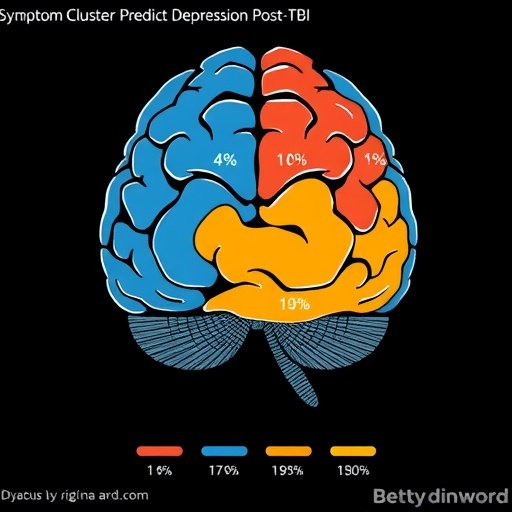
In a groundbreaking study published in BMC Psychiatry, researchers have unveiled a sophisticated, data-driven method to identify patients at heightened risk of depression following mild traumatic brain injury (mTBI), an increasingly prevalent yet under-recognized public health challenge. The study leverages advanced clustering techniques to decode complex symptom patterns, offering new pathways for early mental health intervention in a population that too often slips through the cracks of conventional screening.
Mild traumatic brain injury affects millions globally each year, frequently leading to a debilitating cascade of psychological and cognitive complications. Among these, secondary depression stands out as a significant and insidious consequence, impairing recovery and quality of life. Clinicians have long grappled with identifying which mTBI survivors are most vulnerable to depression, as traditional assessments often fail to capture nuanced symptom interrelations or individual resilience factors.
The research team, led by Chen et al., conducted a meticulous analysis involving 249 adults treated at a tertiary hospital in northern Taiwan. Each participant had sustained an mTBI with Glasgow Coma Scale (GCS) scores ranging from 13 to 15, indicative of mild injury severity. Using the Rivermead Post-Concussion Questionnaire, a comprehensive measure of post-concussion symptoms, they applied hierarchical clustering with Ward’s method refined by Bayesian Information Criterion (BIC) to elucidate distinct symptom-severity profiles.
This unsupervised clustering revealed three robust phenotypes classified as mild, moderate, and severe, each representing unique constellations of post-concussion symptoms. Notably, the severe cluster was dominated by pronounced visual disturbances such as light sensitivity and double vision—symptoms that may reflect underlying neural circuit disruptions previously underappreciated in psychiatric risk stratification.
To translate these phenotypes into actionable clinical tools, the study utilized k-means clustering to assign individuals to the identified groups by minimizing variance within clusters. This approach sharpened the precision of phenotype assignment, allowing for individualized risk modeling. Depression outcomes were assessed using the Beck Depression Inventory-II, with a threshold score of 13 demarcating clinical significance.
The results were striking. Compared to the mild symptom cluster, individuals with moderate symptom severity had over five times the odds of developing secondary depression, while those in the severe cluster were at a staggering 17-fold increased risk. These associations held after rigorous adjustment for confounders including GCS score, age, sex, and psychological resilience—a key psychosocial metric that independently conferred protection against depression.
Indeed, resilience emerged as a critical moderator; each incremental point on a standardized resilience scale corresponded to a 5% reduction in depression odds. Similarly, higher GCS scores signaled less severe brain injury and were protective, but the magnitude of symptom severity still played a dominant role. The integrated multivariable model demonstrated exceptional diagnostic accuracy, boasting an area under the curve (AUC) of 88%, reinforcing its real-world utility.
This pioneering work pushes the boundaries of psychiatric diagnostics by integrating objective symptom clustering with psychosocial metrics. The hybrid approach reveals hidden phenotypes otherwise masked by heterogeneous symptom presentations, enabling clinicians to stratify depression risk with unprecedented granularity. Such stratification promises to revolutionize post-mTBI care by informing personalized screening regimens and targeted therapeutic interventions.
Furthermore, the identification of visual symptoms as a hallmark of the severe phenotype invites deeper neurobiological investigation. Light sensitivity and diplopia may signal disruptions in distinct brain networks vulnerable to mTBI, offering potential biomarkers or therapeutic targets that bridge neurology and psychiatry.
While the study’s cross-sectional design limits causal inference, its robust methodology and clinically relevant sample lay a promising foundation for prospective validation. Future longitudinal studies could ascertain whether interventions tailored to these phenotypes mitigate depression progression and improve functional outcomes.
The implications extend beyond neuroscience, challenging the mental health community to embrace precision psychiatry paradigms powered by machine learning. By harnessing electronic symptom data and psychosocial profiling, healthcare systems can optimize resource allocation, reduce the burden of undiagnosed depression, and enhance recovery trajectories in brain injury survivors.
In summary, Chen and colleagues deliver a compelling case for the clinical adoption of symptom-severity phenotypes in mTBI. Their cluster-based approach not only deepens understanding of post-concussion psychopathology but equips practitioners with a potent predictive tool. As the global incidence of mild traumatic brain injury continues to rise, such innovations are imperative to mitigate long-term psychological sequelae, ultimately improving patient lives across diverse healthcare landscapes.
Cite Scienmag News
Glenn Wilkins. (November 4, 2025). Symptom Clusters Predict Depression Post-TBI. Scienmag. https://scienmag.com/symptom-clusters-predict-depression-post-tbi/
Glenn Wilkins. "Symptom Clusters Predict Depression Post-TBI." Scienmag, 4 November 2025, https://scienmag.com/symptom-clusters-predict-depression-post-tbi/. Accessed 4 September 2026.
Glenn Wilkins. "Symptom Clusters Predict Depression Post-TBI." Scienmag. November 4, 2025. https://scienmag.com/symptom-clusters-predict-depression-post-tbi/


