


Every branch of science eventually confronts the same awkward truth: the tools that make discovery possible can also become the thing that slows it down. In human brain imaging, that tension has grown sharper as the field has expanded from crisp structural scans into a sprawling, multimodal enterprise. A single project might begin with magnetic resonance imaging data processed by one pipeline, continue with diffusion tractography handled by another package, pass through network analyses cobbled together in a scripting environment, and end with visualizations produced by yet another program. Each step may work perfectly in isolation, yet the seams between them are where projects stall, errors creep in, and newcomers to the field lose months of their training to reinventing basic glue code.
A team at the Montréal Neurological Institute of McGill University has now published a detailed account of how they have managed this complexity, both inside their own laboratory and for the wider community. Writing in Nature Protocols, Zhen-Qi Liu, Vincent Bazinet and colleagues, led by Bratislav Misic, describe netneurotools, an open-source Python toolkit that has been continuously developed and maintained by the laboratory’s trainees since its inception. The paper is both a practical protocol for carrying out network neuroscience analyses and a manifesto for a different way of building scientific software, one in which the informal, ad hoc scripts that every laboratory accumulates are treated as a legitimate, shareable scientific resource.
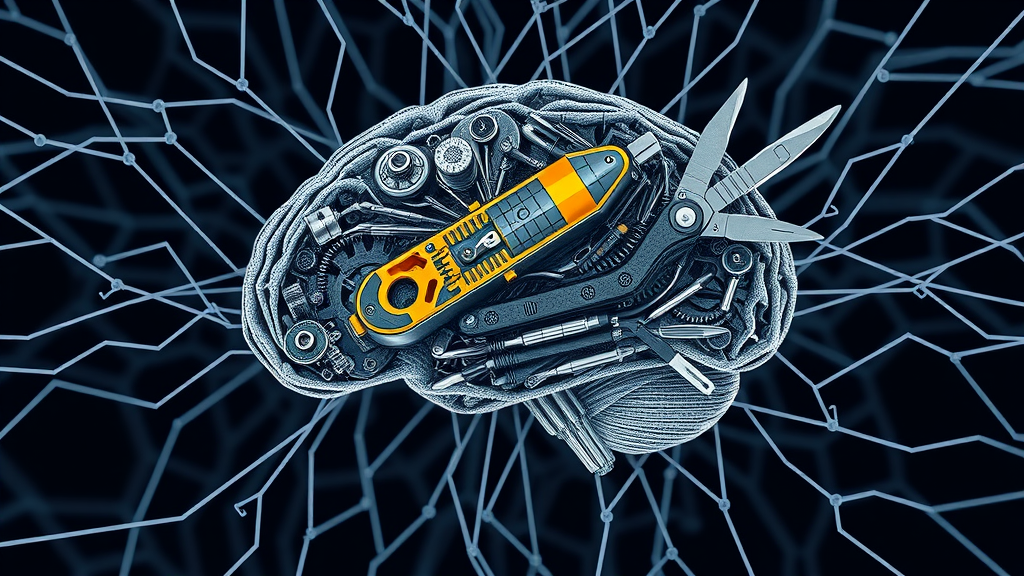
The philosophy behind the toolkit is disarmingly simple. The authors describe netneurotools as the Swiss army knife of the laboratory: a collection of functions and routines that the group uses constantly but that belong to no established pipeline or package. Where large neuroimaging platforms excel at well-defined tasks such as preprocessing functional magnetic resonance imaging or reconstructing diffusion data, they are not designed to interoperate with one another. The gaps between them, the authors argue, are precisely where trainees are forced to improvise isolated heuristics and workarounds. netneurotools formalizes those improvisations, turning scattered personal scripts into documented, tested, reusable code that anyone can pick up.
Technically, the toolkit is built on the familiar foundations of the scientific Python ecosystem, drawing on array programming libraries such as NumPy, the algorithms of SciPy, machine learning utilities from scikit-learn, graph structures from NetworkX, and file-reading capabilities from nibabel and nilearn. It extends these foundations with capabilities that are specific to network neuroscience. These include utilities for handling cortical surface meshes and transforming data between the many parcellation schemes that fragment the field, from volumetric atlases to multi-resolution cortical subdivisions. Because a brain map computed on one parcellation cannot be directly compared with a map on another, robust surface-based resampling and interpolation are among the most valuable functions the package provides, sparing researchers from the error-prone manual conversions that have long been a rite of passage in the field.
Network analysis itself forms a second major pillar. The toolkit implements routines for generating group-representative structural brain networks using distance-dependent consensus thresholding, an approach designed to respect the fact that anatomical connection probability falls with physical distance in the brain. It provides algorithms for randomizing weighted networks while preserving key topological properties, a crucial step in any null-model-based analysis, including a simulated annealing method developed by the same group for rigorously controlling network structure. It also implements a library of network communication models, which ask how signals could theoretically travel along the wiring of the brain, from classical shortest-path routing inspired by the Floyd, Roy and Warshall algorithms to navigation strategies and diffusion-style models that better capture the biology of neural signaling.
Statistical machinery rounds out the package. Network neuroscience increasingly relies on spatial statistics, because brain measures are arranged in space and neighboring regions are not independent. netneurotools includes implementations of spatial autocorrelation measures such as Moran’s I and Geary’s C, along with bivariate extensions that quantify spatial associations between two brain maps. It offers null models that preserve the spatial autocorrelation of data before statistical testing, a safeguard against the inflated significance that naive permutation schemes can produce. Dominance analysis, a technique from psychology for assessing the relative importance of correlated predictors in regression, is also available, addressing a common challenge when multiple brain properties compete to explain a neural phenomenon.
The protocol paper walks readers through complete workflows that chain these functions together to answer neurobiologically meaningful questions. Example analyses include relating brain network organization to microarchitectural features such as receptor distributions and cell-type composition, examining how strongly the brain’s structural wiring constrains its functional dynamics across different imaging modalities, and generating spatially informed null models for testing whether an observed pattern of structure-function coupling is unusual. Workflow diagrams in the paper show how data flow from raw parcellated imaging outputs, through the toolkit’s conversion, modeling and statistical layers, to interpretable figures, giving trainees a template they can adapt to their own projects rather than a black box they must trust blindly.
Beyond its technical content, the article makes a cultural argument that is likely to resonate far beyond one laboratory. The authors position netneurotools as a necessary counterweight to out-of-the-box software packages, arguing that smaller, ad hoc functions deserve recognition as real scientific contributions. By opening a window into the inner workings of a laboratory, the toolkit invites a new kind of discourse among research groups, one in which the unglamorous glue code that actually holds a project together is shared, critiqued and improved collectively. The package has been open to contributions from neuroscientists across the globe since its inception, and its development by trainees reflects a deliberate pedagogical choice: writing and maintaining shared infrastructure is itself a form of scientific training.
The timing of this publication is significant. A recent assessment of open-source neuroscience software described the field’s dependence on volunteer-maintained tools as precarious, and the proliferation of analysis pipelines has made reproducibility a persistent concern. By documenting their toolkit in a peer-reviewed protocols journal, the Misic laboratory is making a case that sustainability in computational neuroscience depends not only on large, polished platforms but also on transparent, community-maintained collections of mid-sized tools that bridge the gaps between them. The approach aligns with the FAIR principles for research software, which call for software to be findable, accessible, interoperable and reusable.
For a field whose data keep multiplying in modality and scale, the message is practical and quietly radical at once. The connectome may be the most complicated object ever mapped, but the daily work of studying it is made of thousands of small, concrete operations: converting a file, resampling a surface, rewiring a network, testing a spatial statistic. netneurotools gathers those operations into one open, living toolbox, and in doing so suggests that the health of network neuroscience may depend as much on how generously its practitioners share their everyday tools as on any single breakthrough analysis.
Subject of Research: An open-source, trainee-developed Python toolkit for network neuroscience analysis and brain imaging data integration
Article Title: netneurotools: a trainee-oriented approach to network neuroscience
Article References: Liu, Z.-Q., Bazinet, V., Hansen, J. Y., Milisav, F., Luppi, A. I., Ceballos, E. G., Farahani, A., Suarez, L. E., Shafiei, G., Markello, R. D., & Misic, B. (2026). netneurotools: a trainee-oriented approach to network neuroscience. Nature Protocols. https://doi.org/10.1038/s41596-026-01446-7
Image Credits: AI Generated
DOI: 10.1038/s41596-026-01446-7
Keywords: netneurotools, network neuroscience, Python toolkit, brain imaging, connectomics, open-source software, brain networks, spatial statistics, null models, FAIR principles, McGill University, Nature Protocols
Cite Scienmag News
Cassandra Pierce. (September 12, 2026). Swiss Army Knife Python Toolkit Opens Up the Hidden Machinery of Brain Network Science. Scienmag. https://scienmag.com/swiss-army-knife-python-toolkit-opens-up-the-hidden-machinery-of-brain-network-science/
Cassandra Pierce. "Swiss Army Knife Python Toolkit Opens Up the Hidden Machinery of Brain Network Science." Scienmag, 12 September 2026, https://scienmag.com/swiss-army-knife-python-toolkit-opens-up-the-hidden-machinery-of-brain-network-science/. Accessed 5 October 2026.
Cassandra Pierce. "Swiss Army Knife Python Toolkit Opens Up the Hidden Machinery of Brain Network Science." Scienmag. September 12, 2026. https://scienmag.com/swiss-army-knife-python-toolkit-opens-up-the-hidden-machinery-of-brain-network-science/


