


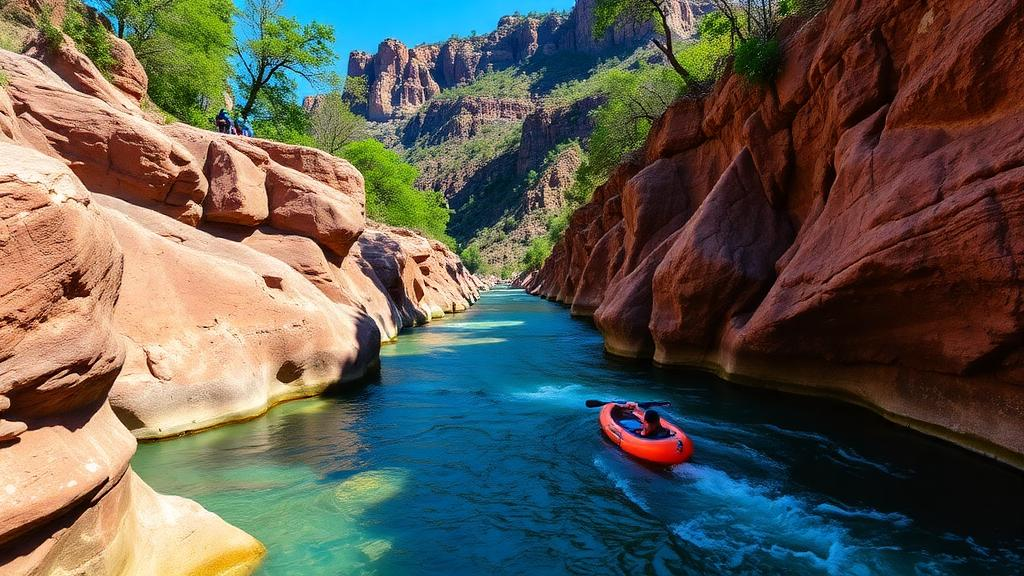
Freshwater ecosystems are in trouble, and one of the fastest-growing threats is also one of the least visible: us, having fun. A new study published in Environmental and Sustainability Indicators by researchers Josep Pueyo-Ros, Vicenç Acuña and Anna Freixa of the Catalan Institute for Water Research offers the first integrated workflow for measuring how angling, boating, swimming and canyoning pressure rivers and reservoirs, and then deciding exactly where managers should spend scarce conservation money. Tested across the 270 water bodies of the Catalan river basin district in northeastern Spain, the framework reveals a striking pattern: recreational damage is not spread evenly across the landscape but concentrated in a small number of beloved swimming holes, fishing reaches and reservoirs, precisely where climate change is squeezing both people and wildlife into the same shrinking aquatic refuges.
The problem the researchers set out to solve is a paradox familiar to environmental agencies across Europe. Everyone agrees that recreation can harm freshwater life, yet under the European Water Framework Directive, recreational activities are not even recognised as a distinct pressure category. Their effects get folded invisibly into broader categories such as hydromorphological alteration or biological disturbance, which means they are routinely underrepresented in official pressure assessments compared with pollution, water abstraction or land-use change. Managers facing the Directive’s requirement to produce cost-effective Programmes of Measures are left guessing where to act, often relying on unstructured expert judgement and reacting site by site rather than planning at the scale of the whole basin. Worse, uncoordinated local restrictions can simply push crowds from a regulated site to an unregulated one downstream, displacing the problem rather than solving it.
The scientific literature has not helped. Angling and navigation have attracted thousands of publications per year, while bathing and canyoning, despite booming in popularity and often being intensely concentrated in space, generate fewer than ten studies annually. This imbalance matters because the impacts differ sharply by activity. Canyoning, with its repeated walking, climbing and sliding along stream channels, tramples riverbeds, mobilises sediment and damages riparian vegetation, reducing the abundance and diversity of benthic macroinvertebrates. Bathing raises turbidity and nutrient concentrations and introduces sunscreen chemicals, although measured concentrations often fall below toxicity thresholds; bathers can also shift the composition of benthic bacterial communities, with unknown consequences for ecosystem functioning. Motorised navigation adds fuel and hydrocarbon contamination, sediment resuspension and noise, while boats and fishing gear alike can spread invasive species. In Mediterranean rivers, where summer crowds coincide with the lowest flows of the year, these disturbances hit ecosystems at their most vulnerable moment.
To build a workable assessment, the team combined hard data with structured human knowledge. They compiled spatial layers for all four activities from official cartography, navigation declarations, environmental informant programmes, federation databases and even georeferenced swimming spots scraped from Google Maps and Wikiloc. Thirty-four semi-structured interviews with stakeholders drawn from an initial pool of 1,558 actors, including administrators, user organisations, companies and researchers, supplied context on where activities peak, what impacts people observe and which measures are realistic. Crucially, the interviews never replaced quantitative data; they complemented it, flagging data gaps and grounding the scoring of management options in practical experience rather than theory.
The quantitative core of the method is elegantly simple in concept: pressure equals the intensity of recreational use relative to the capacity of the receiving water body. Angling pressure, for example, was calculated from daily licence equivalents weighted by fishing modality, with salmonid harvest zones weighted twenty times more than catch-and-release zones, then normalised by river length and mean annual discharge estimated with a calibrated SWAT+ hydrological model. Navigation pressure weighted internal combustion engines twenty times more than rowing or sailing. Each water body was then classified as having null, low, moderate or high pressure using the Jenks natural breaks algorithm, with a separate ‘no data’ category preserving uncertainty rather than pretending absent evidence means absent pressure.
The results confirmed strong spatial clustering. Angling was the most widespread activity, yet only 5 percent of water bodies reached high pressure, concentrated in salmonid harvest reaches and intensively fished reservoirs. Navigation was overwhelmingly benign: 90 percent of water bodies showed null pressure, with the few high-pressure cases tied to reservoirs permitting motorised boats. The real story lay in the data gaps. Bathing was identified in 97 water bodies, but visitor counts existed for only 14 of them, leaving 86 percent unquantifiable. Canyoning fared similarly, with 74 percent of affected water bodies lacking descent data. In other words, the activities growing fastest and least studied are precisely those managers cannot currently measure, a systematic blind spot that likely leads to underestimating total recreational pressure.
From the assessment, the researchers compiled 26 candidate management measures, each summarised in a standardised factsheet covering cost, complexity, implementation time, social acceptance and expected effectiveness. Two composite indices, one for effectiveness and one for difficulty, then ranked the options. The winners combined broad reach with low barriers: extending the criteria for prohibiting bathing, awareness campaigns on bathing impacts, banning internal combustion engines across all reservoirs, and prohibiting fishing in trout genetic reserves all scored highly. At the bottom sat expensive infrastructure projects such as artificial channels for water skiing and adaptation of public swimming pools, whose difficulty was driven mainly by economic cost. Notably, difficulty was shaped more by cost and social acceptance than by technical complexity or time, a finding with clear implications for what agencies can realistically deliver.
The final piece is a rule-based decision-support algorithm that walks each water body through a logical sequence. Low or null pressure means maintaining current regulation. Moderate or high pressure triggers impact monitoring, scaled up for specially protected sites. If significant ecological impacts are confirmed, specially protected water bodies move toward eliminating the pressure entirely, while unprotected ones receive pressure-reduction measures; where impacts are not significant, precautionary reduction applies in protected areas and continued monitoring elsewhere. The algorithm was reviewed by basin technicians and reproduced the decision logic managers already use informally, but now in a transparent, reproducible form. When unquantified bathing or canyoning activity was conservatively treated as high pressure, the framework correctly flagged that data collection, not regulation, should come first.
Prioritisation across the basin distilled the message further: roughly 10 percent of water bodies, those combining aggregated pressure of four or higher with at least one conservation designation such as protected natural areas, fluvial natural reserves or trout genetic reserves, emerge as the prime targets for intervention. The authors are candid about limitations. Annual-average indicators miss the seasonal intensity of summer low-flow peaks, the stakeholder sample is purposive rather than statistically representative, and bathers’ informal perspectives were harder to capture than those of organised angling clubs. The algorithm has been validated qualitatively, not against historical management outcomes, because no such systematic records exist. Yet the framework’s modular design, built from data types most regions already possess or can generate cheaply, makes it transferable to any water-scarce, tourism-intensive basin where recreational pressure is outpacing management capacity. Its deepest insight may be the simplest: in data-poor conservation, knowing what you do not know is itself a management action, and spending a little on counting swimmers and canyoners may buy more ecological protection than any single restrictive rule.
Subject of Research: Prioritising recreational pressures on freshwater ecosystems for management action under uncertainty
Article Title: From pressure indicators to management action: prioritising recreational pressures in freshwater ecosystems under uncertainty
Article References: Pueyo-Ros, J., Acuña, V., & Freixa, A. (2026). From pressure indicators to management action: prioritising recreational pressures in freshwater ecosystems under uncertainty. Environmental and Sustainability Indicators, 32, Article 101535. https://doi.org/10.1016/j.indic.2026.101535
Image Credits: AI Generated
DOI: 10.1016/j.indic.2026.101535
Keywords: freshwater ecosystems, recreational pressures, Water Framework Directive, bathing, angling, canyoning, navigation, decision-support algorithm, Mediterranean rivers, pressure indicators, stakeholder interviews, environmental management
Cite Scienmag News
Sloane Callahan. (September 30, 2026). Swimmers, Anglers and Canyoners: New Tool Ranks Where Fun Hurts Rivers Most. Scienmag. https://scienmag.com/swimmers-anglers-and-canyoners-new-tool-ranks-where-fun-hurts-rivers-most/
Sloane Callahan. "Swimmers, Anglers and Canyoners: New Tool Ranks Where Fun Hurts Rivers Most." Scienmag, 30 September 2026, https://scienmag.com/swimmers-anglers-and-canyoners-new-tool-ranks-where-fun-hurts-rivers-most/. Accessed 4 October 2026.
Sloane Callahan. "Swimmers, Anglers and Canyoners: New Tool Ranks Where Fun Hurts Rivers Most." Scienmag. September 30, 2026. https://scienmag.com/swimmers-anglers-and-canyoners-new-tool-ranks-where-fun-hurts-rivers-most/


