A combination of swimming exercise and an aqueous leaf extract of Ocimum gratissimum, the aromatic West African herb known as scent leaf or efirin, reversed a range of cardiometabolic abnormalities in high-fat diet-induced obese male Wistar rats, according to a new open access study published in Clinical Phytoscience. The research, led by S. T. Shittu and colleagues at the University of Ibadan in Nigeria, found that ten weeks of either swimming, the extract at 400 mg/kg, or both together significantly lowered body weight, blood pressure, fasting blood glucose, glucose intolerance and a marker of oxidative stress in obese rats, although the authors caution that evidence for a truly synergistic effect of the combined regimen requires further statistical confirmation.
The experimental design was straightforward but demanding in its timeline. Twenty-five male Wistar rats, roughly four weeks old and weighing between 50 and 80 grams, were randomly divided into five groups of five animals each. One control group received a standard diet throughout, while the other four groups were fed a pelletized high-fat diet with an energy density of approximately 4.1 to 4.5 kcal/g for twelve weeks to induce obesity. After those twelve weeks, the obese animals were assigned to different interventions for a further ten weeks while remaining on the high-fat diet: one group received distilled water and remained untreated, one swam for thirty minutes a day five days a week, one received the Ocimum gratissimum extract orally at 400 mg/kg daily, and the final group underwent both the exercise protocol and the extract treatment. The entire study lasted 22 weeks, with body weight monitored weekly.
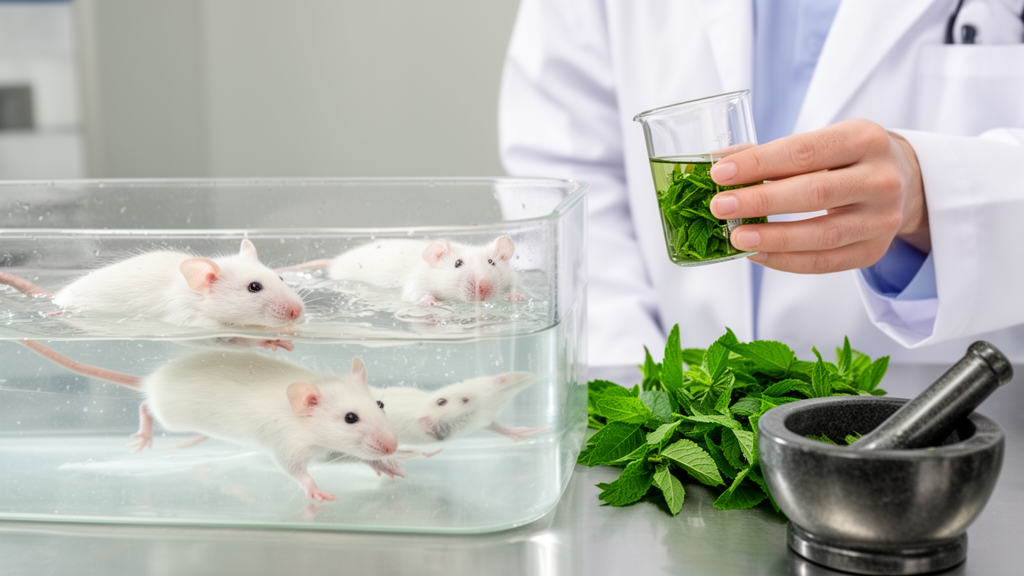
The swimming protocol was adapted from a published regimen and involved attaching a load equal to 2 percent of each rat’s body weight to its tail before the animals were placed in a thermoregulated swimming chamber maintained at 31 ± 1 °C. The tank was 100 cm deep and filled with water to the 50 cm mark. The rats were first trained to swim through gradually increasing durations until they could manage thirty minutes at a stretch, after which the thirty-minute sessions, five days a week, continued for the intervention period. Blood pressure was measured non-invasively with a tail-cuff device, with the machine operator blinded to the study groups, and an oral glucose tolerance test was performed after an overnight fast at the conclusion of the experiment using a 2 g/kg oral glucose load with blood sampling at 15, 30, 60 and 90 minutes.
By the twelfth week, all four high-fat diet groups had gained significantly more weight than the controls, reaching averages between roughly 279 and 296 grams compared with 233.00 ± 24.25 grams in the control group, and the differences among the high-fat groups themselves were not significant. After the ten-week intervention period, however, the picture changed markedly. Body weight fell significantly in the exercised group to 248.40 ± 17.70 g, in the extract-treated group to 262.17 ± 9.13 g, and in the combined group to 251.25 ± 14.06 g, relative to the untreated obese group at 313.50 ± 12.48 g. Notably, combining exercise with the extract did not produce any additional weight-lowering effect beyond what either treatment achieved on its own.
Obesity status itself was assessed with the Lee Index, a metric calculated as the cube root of body weight in grams divided by nasal-anal length in centimeters, multiplied by 1000, with rats scoring above 310 adjudged obese. At week 22, the untreated obese group still scored 318.90 ± 3.60, above the obesity threshold, while the exercised, extract-treated and combined groups scored 298.98 ± 2.47, 293.04 ± 2.09 and 298.60 ± 4.10 respectively, all below the decision rule. The untreated obese animals also showed markedly elevated blood pressure compared with controls: systolic pressure of 161.1 ± 2.65 mmHg versus 104.7 ± 1.45 mmHg, diastolic pressure of 110.4 ± 5.84 mmHg versus 79.5 ± 2.79 mmHg, and mean arterial blood pressure of 126.8 ± 4.58 mmHg versus 87.6 ± 1.52 mmHg.
All three intervention groups brought those blood pressure variables back down significantly. The exercised group recorded systolic, diastolic and mean arterial pressures of 111.2 ± 3.46, 82.0 ± 2.08 and 91.3 ± 2.49 mmHg respectively; the extract group recorded 116.4 ± 4.38, 69.7 ± 3.36 and 85.1 ± 2.74 mmHg; and the combined group recorded 113.1 ± 1.61, 82.6 ± 3.51 and 92.5 ± 2.75 mmHg. The authors note that while Ocimum gratissimum may enhance vasodilatory effects by promoting nitric oxide production, reducing oxidative stress and modulating vascular tone, and exercise improves endothelial function and cardiovascular fitness, these mechanisms were not directly investigated in the study.
Glucose handling showed a similar pattern of reversal. The area under the curve of the oral glucose tolerance test was significantly increased in the untreated obese group at 13721 ± 106.70 mg.min/dL compared with 10727 ± 463.50 mg.min/dL in controls, and fasting blood glucose was elevated at 113.3 ± 3.18 mg/dL versus 87.0 ± 3.79 mg/dL. Exercise alone, the extract alone and the combination each significantly reduced both measures: tolerance test areas fell to 10635 ± 359.20, 10285 ± 4.04 and 10903 ± 497.2 mg.min/dL respectively, and fasting glucose fell to 81.0 ± 2.00, 69.0 ± 4.04 and 82.6 ± 1.20 mg/dL. In all groups, blood glucose peaked thirty minutes after the glucose load and had returned to near-basal values by ninety minutes.
Some findings diverged from the general pattern of improvement. Plasma insulin was significantly increased only in the exercised groups, at 4.46 ± 0.25 µU/mL for exercise alone and 4.82 ± 0.28 µU/mL for exercise plus extract, compared with 3.58 ± 0.13 µU/mL in controls, while the untreated obese group at 3.42 ± 0.12 µU/mL and the extract-only group at 3.65 ± 0.12 µU/mL did not differ from controls. Hepatic glycogen content was significantly depleted in the exercise-only group but unchanged in the other groups. Among lipids, triglycerides were significantly elevated in the untreated obese rats and significantly reduced by exercise or extract treatment, whereas total cholesterol, LDL and HDL did not differ across the groups. On oxidative stress, malondialdehyde rose in the obese group to 95.96 ± 1.04 × 10⁻² µM/mL versus 73.74 ± 2.02 × 10⁻² µM/mL in controls and fell significantly with all three interventions, but activities of the antioxidant enzymes superoxide dismutase and catalase remained reduced in all obese rats regardless of treatment, suggesting the interventions lowered malondialdehyde through reduced free radical production or through antioxidant systems not measured in this study.
The extract itself was prepared from fresh Ocimum gratissimum leaves sourced from Bodija Market in Ibadan, identified under reference FHI: 110026, air-dried for two weeks, pulverized and macerated in distilled water for 24 hours to yield an 11.32 percent aqueous extract stored at 4 °C. Previous work by the same team using gas chromatography-mass spectrometry identified twelve bioactive compounds in the extract, with thymol the most abundant at 47.32 percent, alongside beta-selinene at 10.44 percent and smaller proportions of compounds including 1,3,8-p-Menthatriene, caryophyllene and p-cymene. The herb has documented anti-hyperlipidemic and fat-lowering effects, and prior studies have reported benefits for hyperglycemia, glucose intolerance and inflammation in various models, though data on its antihypertensive effect specifically in obesity had been scarce; earlier work examined salt-induced and cobalt chloride-induced hypertension in vivo and angiotensin-converting enzyme inhibition in vitro.
The authors frame the findings within the broader context of rising obesity, noting projections that roughly half the world’s population will be overweight and a quarter obese by 2035, up from 38 percent and 14 percent in 2020, with obesity in Africa predicted to climb from 5 percent to 14 percent over the same period. Because weight-loss drugs such as sibutramine carry side effects ranging from dry mouth and insomnia to thrombus formation and neurological symptoms, plant-based interventions remain widely adopted alternatives. The study’s conclusion is measured: exercise and Ocimum gratissimum, either alone or in combination, improved selected cardiometabolic alterations in high-fat diet-induced obese male Wistar rats, but the possibility that the combined regimen outperforms either intervention alone, hinted at by the elevated insulin levels in exercised animals, requires further statistical confirmation. As an animal study with five rats per group, the work establishes hypotheses for future research rather than direct applications to human health.
Subject of Research: Effects of swim exercise and Ocimum gratissimum leaf extract on cardiometabolic parameters in high-fat diet-induced obese male Wistar rats
Article Title: Combining swim exercise and Ocimum gratissimum leaf extract: a dual approach to mitigate cardiometabolic derangement in obese male Wistar rats
Article References: Shittu, S. T., Dare, B. I., Omolanwo, J. O., Shittu, S. A., Isehunwa, G. O., Lasisi, T. J., & Alada, A. R. A. (2026). Combining swim exercise and Ocimum gratissimum leaf extract: a dual approach to mitigate cardiometabolic derangement in obese male Wistar rats. Clinical Phytoscience, 12(1), Article 18. https://doi.org/10.1186/s40816-026-00432-6
Image Credits: AI Generated
DOI: 10.1186/s40816-026-00432-6
Keywords: Ocimum gratissimum, obesity, Wistar rats, swimming exercise, blood pressure, glucose tolerance, high-fat diet, oxidative stress, malondialdehyde, triglycerides, Lee index, hepatic glycogen
Cite Scienmag News
Daisy Hatcher. (October 29, 2026). Swim Exercise and Scent Leaf Extract Reverse Cardiometabolic Changes in Obese Rats. Scienmag. https://scienmag.com/swim-exercise-and-scent-leaf-extract-reverse-cardiometabolic-changes-in-obese-rats/
Daisy Hatcher. "Swim Exercise and Scent Leaf Extract Reverse Cardiometabolic Changes in Obese Rats." Scienmag, 29 October 2026, https://scienmag.com/swim-exercise-and-scent-leaf-extract-reverse-cardiometabolic-changes-in-obese-rats/. Accessed 29 October 2026.
Daisy Hatcher. "Swim Exercise and Scent Leaf Extract Reverse Cardiometabolic Changes in Obese Rats." Scienmag. October 29, 2026. https://scienmag.com/swim-exercise-and-scent-leaf-extract-reverse-cardiometabolic-changes-in-obese-rats/