


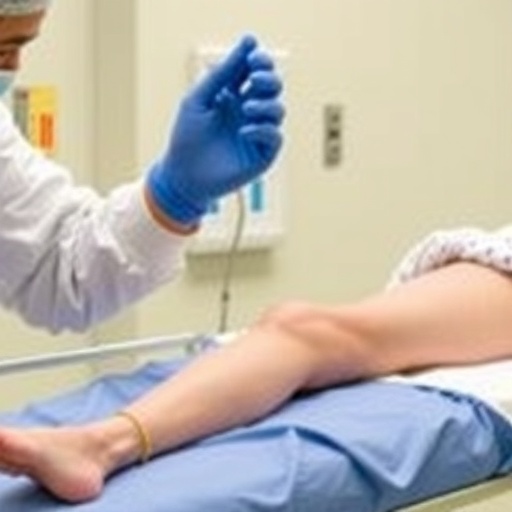
A recent study investigating the exposure and confidence of final-year medical students in the UK with respect to amputations and amputee care has revealed concerning insights into the educational experience of future healthcare providers. Amidst a backdrop of increasing amputations due to various causes—including trauma, diabetes, and vascular diseases—the report underscores the necessity for a comprehensive curriculum addressing not just surgical techniques but also the holistic care of patients facing limb amputation. This national survey has effectively highlighted a gap in medical education that could significantly impact patient outcomes.
Amputation remains a profound life-altering procedure for many patients, and it is essential that medical professionals feel equipped to handle the complexities that arise from such interventions. Many healthcare systems are placing greater emphasis on rehabilitation and patient-centered approaches to care after limb loss. The findings from this survey reflect a stark reality: while medical students may graduate with extensive knowledge of anatomy and surgical protocols, their practical exposure and confidence in managing amputee care are insufficient in preparing them for real-world challenges.
The study, conducted by an expert team led by Mahmood and involving a wide array of respondents from various UK medical schools, found that a significant number of students reported limited hands-on experiences with amputation procedures. The ramifications of such findings are distressing, both for the medical community and future patients. The lack of practical exposure betrays the necessity for institutional reforms within medical education to ensure that students are adequately prepared for the surgical and rehabilitative needs of amputee care.
The survey further explores the attitudes of these students towards their training, revealing an alarming level of uncertainty when it came to personal confidence in managing amputee care. This lack of confidence is perhaps understandable in light of empirical findings; however, it calls for immediate action from educational institutions to integrate more comprehensive amputee care training into their curricula. Students expressed a desire for increased training and exposure, which could positively correlate with greater levels of confidence and competence post-graduation.
Interestingly, the survey not only noted gaps in exposure to surgical techniques but also indicated a concerning lack of familiarity with the psychological and social dynamics that accompany amputations. Understanding the emotional impact of limb loss is critical for providing empathetic care and effective rehabilitation strategies. Consequently, this indicates a pressing need for a multi-disciplinary approach to medical education—one that encompasses not only surgical training but also the emotional and social aspects of patient care.
In addition, the findings stress the importance of mentorship and clinical placements that encourage active participation in surgical procedures related to amputations. Without direct involvement and guidance from experienced surgeons, students may struggle to bridge the gap between theoretical knowledge and practical application. Institutions should consider fostering environments where students can observe and take part in surgical procedures, ensuring they are exposed to various amputation scenarios that they might face in practice.
The survey also calls into question the adequacy of current teaching methodologies utilized in medical schools across the UK. Traditional lectures and textbook learning may no longer suffice for complex subjects that require practical skills and emotional intelligence. Innovative teaching approaches, such as simulation and role-playing, could better prepare medical students for real-world challenges they will face once they enter clinics and hospitals.
Moreover, collaborating with external organizations specializing in limb rehabilitation and psychosocial support could enhance training modules, offering students insights and resources that are integral to comprehensive patient care. Building partnerships with these organizations would reinforce the idea that amputation is not solely a surgical event but a pivotal moment in a patient’s life that requires ongoing support and care.
Educational curriculum reform in this area could also benefit from involving patients themselves, allowing medical students to hear firsthand experiences from amputees. Through storytelling and patient engagement, students can develop a more profound understanding of the lived experiences of individuals with limb loss, which can translate into more compassionate care in their future practices.
Improving educational frameworks is not just beneficial for students; it also holds transformative potential for healthcare systems as a whole. Ultimately, if future healthcare professionals are better trained in amputee care, it may lead to improved patient outcomes, reduced anxiety around surgical procedures, and enhanced rehabilitation experiences for amputees.
In summary, the findings from Mahmood and colleagues’ survey have brought to light a critical need within UK medical education concerning amputations and amputee care. By addressing the gaps in exposure and confidence highlighted in this comprehensive study, medical schools can foster not just skilled surgeons, but compassionate, well-rounded practitioners who are prepared to meet the multifaceted needs of their patients. As such, this investigation represents a crucial step in redefining how we train the next generation of healthcare providers, ensuring they are better equipped to face the challenges of modern medicine.
In conclusion, collaborative efforts and reform in medical education regarding amputations and amputee care are required—for the sake of training capable healthcare providers and, ultimately, for enhancing the quality of life for those who undergo such significant life changes.
Mahmood, A., Macdonald, H., Ali, I. et al. Undergraduate exposure and confidence to amputations and amputee care: a national survey of final-year UK medical students.
BMC Med Educ 25, 1658 (2025). https://doi.org/10.1186/s12909-025-08027-4
Cite Scienmag News
Courtney Benton. (November 28, 2025). Survey Reveals UK Medical Students’ Amputation Confidence. Scienmag. https://scienmag.com/survey-reveals-uk-medical-students-amputation-confidence/
Courtney Benton. "Survey Reveals UK Medical Students’ Amputation Confidence." Scienmag, 28 November 2025, https://scienmag.com/survey-reveals-uk-medical-students-amputation-confidence/. Accessed 4 September 2026.
Courtney Benton. "Survey Reveals UK Medical Students’ Amputation Confidence." Scienmag. November 28, 2025. https://scienmag.com/survey-reveals-uk-medical-students-amputation-confidence/


