


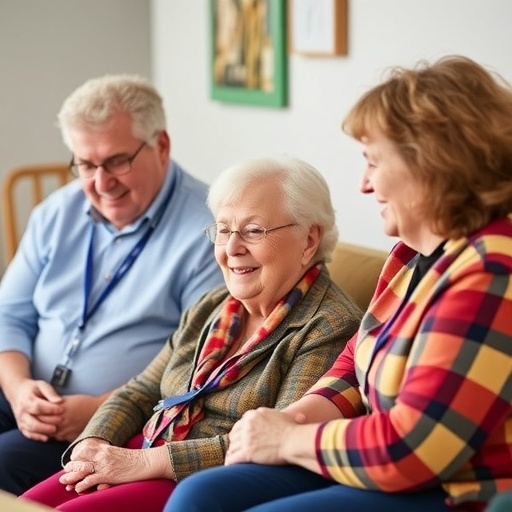
In a groundbreaking study spearheaded by researchers Karlsson, Mahmud, and Andersson, a mobile old-age care team dedicated to supporting deaf older adults utilizing Swedish sign language has emerged as a transformative solution for enhancing the quality of life in this often-overlooked demographic. The research, scheduled for publication in the esteemed journal BMC Geriatrics in 2025, sheds light on the unique experiences of deaf older adults in their interactions with these innovative support services.
The importance of providing tailored care for the deaf elderly cannot be overstated. As populations across the globe age, the unique challenges faced by this group become increasingly apparent. Deaf older adults often grapple with communication barriers that can complicate their access to health and wellness resources. This is particularly critical, as effective communication is a cornerstone of quality healthcare. By employing mobile teams that communicate fluently in Swedish sign language, there is potential to bridge these gaps, ensuring that this vulnerable population receives the holistic care they deserve.
Notably, the research team conducted comprehensive interviews to gather first-hand accounts from the deaf older adults receiving this mobile care. The insights gleaned from these interviews reveal a tapestry of emotions, ranging from initial skepticism to profound gratitude for the specialized support received. Many participants described their interactions with caregivers as transformative, fostering a new sense of empowerment and independence that had previously been elusive.
One fascinating aspect of the study is its emphasis on the significance of culturally competent care. The mobile care team’s proficiency in Swedish sign language does not merely serve as a communication tool but rather as a means to foster trust and rapport. This underscores a crucial point: that healthcare providers must possess not just technical skills, but also cultural understanding in order to effectively serve diverse populations.
Moreover, the study highlights how this mobile old-age care model addresses social isolation, a common issue among elderly individuals. The presence of caregivers who are trained in sign language encourages social interaction and companionship, combating the loneliness that can result from both age and hearing impairment. Participants shared anecdotes about their relationships with caregivers that extended beyond mere service provision; they often described them as friends who brought joy and warmth into their lives.
The researchers also addressed the logistical challenges faced by mobile care teams in reaching remote or underserved areas. With innovative strategies and dedicated outreach, the team has been able to extend their services to individuals who might otherwise be cut off from essential resources. The mechanics of such an approach highlight not only the commitment of the care providers but also the innovative spirit guiding the project.
As the study emerges, it is crucial to consider the broader implications for public health policy. The findings present a compelling case for integrating sign language education into caregiver training programs nationally and internationally. Such an initiative could transform the landscape of elder care, ensuring that a more significant proportion of professionals are equipped to meet the needs of diverse aging populations.
The research also poses important questions regarding funding and resource allocation for mobile care services. While the benefits are clear, systematic support and investment are required to sustain such innovative approaches. Policymakers are urged to take note of the potential for mobile care teams to improve health outcomes for marginalized populations, advocating for financial models that ideally support long-term investments in this domain.
Additionally, this research sparks a critical dialogue surrounding the role of technology in elder care. The intersection of mobile support services and telehealth presents a fertile ground for exploration, offering an opportunity for enhanced engagement with the elderly deaf community. From virtual consultations conducted in sign language to online support networks, technology has the potential to reduce barriers even further.
As the study approaches publication, the anticipation surrounding its findings signifies an important step towards a more inclusive understanding of elder care. The insights provided within the research are likely to resonate beyond the deaf community, as they touch upon universal themes of care, dignity, and respect that are pertinent to all aging individuals.
The researchers argue that the success of this mobile care initiative could inspire similar programs worldwide, reflecting a scalable model of support that could adapt to various cultural contexts. This adaptability is crucial in a globally connected world, where the challenges faced by elderly populations vary widely across different regions.
In summary, the upcoming publication of Karlsson, Mahmud, and Andersson’s research promises to ignite a vital conversation about the role of specialized mobile care teams in enhancing the quality of life for deaf older adults. The study not only provides an evidence base for the efficacy of such services but also advocates for a reimagining of how society approaches elder care. It invites stakeholders—caregivers, policymakers, and communities alike—to collaborate in fostering inclusive environments where all older adults can access the care and support they need to thrive.
The release of this study could herald a shift in how care is administered to deaf older adults, spotlighting the necessity for inclusivity and access in healthcare. It is an opportune moment to consider the role of empathy and understanding in medical practices and to reflect on the profound impact that a culturally aware approach can have on individuals’ lives. As readers await the publication, the expected insights have potential ramifications for both policy and practice, underpinning the urgent need for informed, compassionate elder care initiatives worldwide.
Furthermore, the call to action stemming from this research may inspire researchers, healthcare providers, and advocacy groups to further explore the dynamics at play within this community. The hopeful narrative emerging from Karlsson, Mahmud, and Andersson’s findings serves as a reminder of the power of human connection in healthcare, particularly highlighted in the lives of those who are often unheard.
As anticipation builds around this pivotal study, it serves as a clarion call for more encompassing and sensitive care strategies that consider not just the medical, but also the emotional and social needs of aging individuals—especially those who navigate the complexities of life with hearing impairment. The future of inclusive elder care may well depend on our willingness to listen, learn, and adapt.
Karlsson, E., Mahmud, Y., Andersson, S. et al. Deaf older adults’ experiences of support from a mobile old-age care team providing support in Swedish sign language.
BMC Geriatr (2025). https://doi.org/10.1186/s12877-025-06675-1
Cite Scienmag News
Ophelia Keating. (December 15, 2025). Support Experiences of Deaf Seniors from Mobile Care Team. Scienmag. https://scienmag.com/support-experiences-of-deaf-seniors-from-mobile-care-team/
Ophelia Keating. "Support Experiences of Deaf Seniors from Mobile Care Team." Scienmag, 15 December 2025, https://scienmag.com/support-experiences-of-deaf-seniors-from-mobile-care-team/. Accessed 4 September 2026.
Ophelia Keating. "Support Experiences of Deaf Seniors from Mobile Care Team." Scienmag. December 15, 2025. https://scienmag.com/support-experiences-of-deaf-seniors-from-mobile-care-team/


