


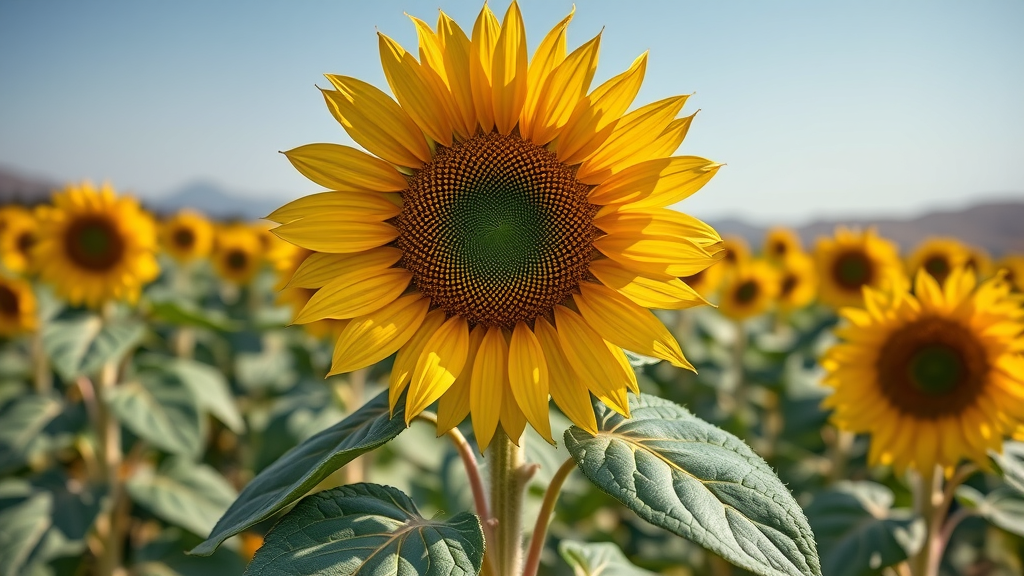
In the parched farmlands of the world’s semi-arid belts, crops rarely face one threat at a time. A field of wheat or maize may be sown into saline soil, endure weeks without rain, then be hammered by a heatwave just as pathogens arrive. Scientists have long known that plants respond differently to combined stresses than to any single stress alone, which is why breeding for one trait at a time has repeatedly failed to deliver resilient varieties. Now, a comprehensive review published in Discover Biotechnology argues that an unlikely genetic donor may help solve the problem: the sunflower, Helianthus annuus, a crop that thrives where others wither.
The review, authored by Gideon Sadikiel Mmbando of the University of Dodoma and Deogracious Protas Massawe of the Tanzania Commission for Science and Technology, synthesizes decades of literature on why certain sunflower genotypes flourish under the punishing conditions that define semi-arid agriculture: erratic rainfall, elevated temperatures, saline soils, and relentless pressure from pests and pathogens. The authors highlight tolerant lines such as S.28111 and SF0049, which have demonstrated the ability to withstand simultaneous salt and drought stress. Their central claim is provocative: these genotypes represent an underexploited genetic resource that could be mined, gene by gene, to build combined stress resistance into crops that currently collapse under the same conditions.
The sunflower’s credentials as a survivor are rooted in its physiology. The plant deploys a deep root system that taps water held in lower soil horizons, allowing it to ride out dry spells that devastate shallow-rooted crops. It performs best at temperatures between 20 and 30 degrees Celsius but tolerates considerably more heat than many staples, and it grows well in the sandy and loamy soils typical of water-scarce regions. Its growth is measured in thermal time, meaning development tracks accumulated heat, and varieties with faster maturation can complete their life cycle within the short, unpredictable growing seasons that climate change is imposing on marginal lands.
Yet the review is careful to note the crop’s limits. Sunflower still requires reliable water during flowering and seed development, and excessive heat during bloom can restrict seed set and depress yield. Effective pollination is essential, and high temperatures or water stress at flowering impair both. These caveats matter because they frame the real value of the sunflower: not as a universal answer, but as a donor of specific, well-characterized tolerance mechanisms that can be transferred to crops where they are missing.
The molecular heart of the review lies in its dissection of the genes and regulatory networks behind sunflower’s toughness. Transcription factors called DREBs, or Dehydration-Responsive Element-Binding Proteins, switch on drought-related genes that improve water uptake and tolerance. The hormone abscisic acid, the master regulator of drought response, orchestrates stomatal closure to limit water loss, and studies cited in the review show ABA is also required for plants to acclimate to combined salt and heat stress, with exogenous ABA application improving rice seedlings’ resistance to multiple abiotic stresses at once.
Other players round out the defensive arsenal. Genes encoding osmoprotectants such as proline and soluble sugars preserve cellular turgor and protect structures under drought and salinity. Heat shock proteins act as molecular chaperones, refolding denatured proteins and stabilizing cells during heat stress, under the control of heat shock transcription factors. When abiotic stresses cause reactive oxygen species to accumulate to toxic levels, sunflower antioxidant enzymes including catalase and superoxide dismutase scavenge them before oxidative damage spreads. Membrane channel proteins called aquaporins regulate water flow across cell membranes, helping the plant stay hydrated under simultaneous heat and drought while also assisting with temperature regulation.
What makes the sunflower especially interesting, the authors argue, is how these abiotic defenses interlock with biotic ones. The review describes hormone cross-talk in which ABA-mediated abiotic stress signaling converges with salicylic acid and jasmonic acid pathways, the classical pillars of defense against pathogens. Resistance genes of the NBS-LRR class, including the Pl5 and Pl8 loci that protect sunflower against downy mildew, trigger defense responses upon pathogen recognition, sometimes culminating in a hypersensitive response that walls off infection. Mitogen-activated protein kinase cascades transmit stress signals and coordinate gene expression, while transcription factors such as WRKY, MYB, and NAC act as molecular switches regulating large suites of stress-responsive genes. The plant even manufactures phenolic compounds and sesquiterpene lactones with antimicrobial properties that inhibit pathogen growth.
Translating this biology into better crops is the review’s practical ambition, and the authors lay out a toolkit that spans classical and cutting-edge methods. Marker-assisted selection allows breeders to track sunflower-derived tolerance alleles using DNA markers, accelerating the introgression of desired traits through repeated backcrossing while shedding undesirable genetic baggage. Quantitative trait locus mapping can pinpoint genomic regions associated with combined drought and pathogen resistance, which can then be moved into other crops. Genetic transformation, via Agrobacterium-mediated delivery or biolistic gene guns, can insert sunflower genes directly into target genomes. The flagship example is HaHB4, a sunflower transcription factor that has been engineered into wheat, where field-grown transgenic lines significantly outyielded wild type under warm, dry conditions, and into soybean, where it improved water use efficiency.
Genome editing adds another layer of precision. The review describes how CRISPR/Cas9 can be used to modify stress-tolerance genes within sunflower itself, creating elite donor lines whose improved alleles can then be deployed in breeding programs for other crops. RNA interference technology offers a complementary strategy, silencing genes that pests and pathogens depend on for entry or survival. Mutagenesis, whether chemical or radiation-induced, can expand the pool of genetic variation from which stress-tolerant individuals are selected, and genomic prediction allows breeders to estimate a plant’s stress susceptibility from its DNA sequence alone, without waiting for phenotypic data. Together, the authors contend, these approaches could shift crop improvement from single-stress thinking to genuinely combined stress design.
The review closes with a note of measured optimism tempered by realism. Deploying genetically modified crops carrying sunflower-derived genes will require careful attention to biosafety, ethical considerations, and regulatory frameworks, and the authors stress that collaboration among research institutions, breeders, and regulators is essential to ensure innovations serve both food security and environmental goals. But the underlying logic is compelling. As climate change intensifies drought, salinity, and heat across the semi-arid regions that are home to hundreds of millions of farmers, crops will inevitably face multiple stresses at once. A flower that has already solved that problem through millions of years of evolution, and that has now been genetically mapped in enough detail to be mined deliberately, may prove to be one of the most valuable untapped resources in the effort to keep agriculture productive on a heating planet.
Subject of Research: Genetic mechanisms of combined biotic and abiotic stress tolerance in sunflower and their transfer to other crops for semi-arid agriculture
Article Title: Sunflower (Helianthus annuus L.): a potential genetic resource for breeding crops with combined stress-resistance in semi-arid environments
Article References: Sunflower (Helianthus annuus L.): a potential genetic resource for breeding crops with combined stress-resistance in semi-arid environments. (n.d.). https://doi.org/10.1007/s44340-025-00036-9
Image Credits: AI Generated
DOI: 10.1007/s44340-025-00036-9
Keywords: sunflower, Helianthus annuus, combined stress, drought tolerance, semi-arid agriculture, CRISPR, HaHB4, abscisic acid, heat shock proteins, marker-assisted selection, food security, crop breeding
Cite Scienmag News
Juliet Wilcox. (September 24, 2026). Sunflower Genes Could Hold the Key to Climate-Proof Crops in the World’s Driest Farmlands. Scienmag. https://scienmag.com/sunflower-genes-could-hold-the-key-to-climate-proof-crops-in-the-worlds-driest-farmlands/
Juliet Wilcox. "Sunflower Genes Could Hold the Key to Climate-Proof Crops in the World’s Driest Farmlands." Scienmag, 24 September 2026, https://scienmag.com/sunflower-genes-could-hold-the-key-to-climate-proof-crops-in-the-worlds-driest-farmlands/. Accessed 4 October 2026.
Juliet Wilcox. "Sunflower Genes Could Hold the Key to Climate-Proof Crops in the World’s Driest Farmlands." Scienmag. September 24, 2026. https://scienmag.com/sunflower-genes-could-hold-the-key-to-climate-proof-crops-in-the-worlds-driest-farmlands/


