

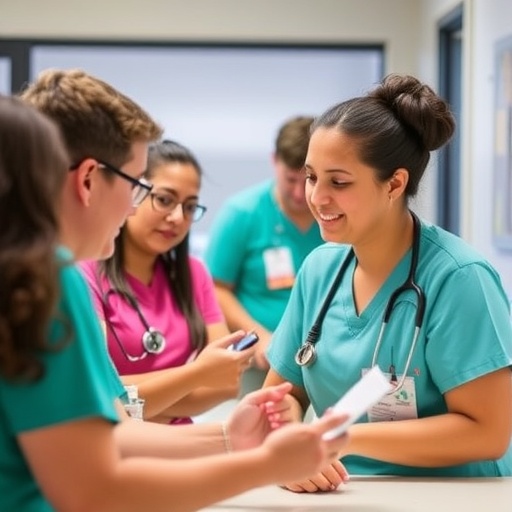
In a compelling study destined to reshape the landscape of nursing education, researchers led by Nahari, Alqahtani, and Almotairy have explored the profound impact of a summer externship program on the work readiness of undergraduate nursing students. Their findings, meticulously reported in a quasi-experimental study published in ‘BMC Medical Education,’ underscore the significance of practical experience in cultivating essential skills for future nurses. The urgency of improving work readiness among nursing graduates cannot be overstated, particularly given the high-stakes environments in which they will soon be employed.
The essence of this study revolves around the undeniable gap that often exists between academic training and the realities of clinical practice. Nursing programs are rigorous, but they frequently lack comprehensive hands-on opportunities that simulate real-world challenges. The externship program introduced by the researchers aims to bridge this gap by providing students with immersive experiences in diverse healthcare settings. Participants engaged with patients, collaborated with healthcare teams, and faced authentic clinical situations that demanded critical thinking and adaptability.
Participants in the study were carefully selected from a pool of undergraduate nursing students. The research design was robust, featuring pre- and post-externship evaluations to gauge improvements in work readiness. These assessments were grounded in a holistic framework that encompassed clinical skills, communication abilities, and the overall confidence of the participants. This meticulous approach allowed the researchers to capture nuanced changes that may not have been immediately apparent through quantitative measures alone.
In analyzing the results, the study revealed a marked improvement in the work readiness of students who completed the externship. Participants reported heightened self-efficacy regarding their clinical capabilities and greater comfort in navigating complex patient care scenarios. This cultural transformation within the participants is a testament to the efficacy of experiential learning. By engaging directly with patients and healthcare professionals, students were able to grasp the intricacies of nursing far beyond theoretical knowledge. Their experiences equipped them with the tools and confidence needed to excel in various clinical environments.
Moreover, the externship program created a dynamic environment that fostered collaboration and teamwork—fundamental aspects of effective nursing practice. Students often found themselves working side by side with experienced nurses and other healthcare providers, which enriched their understanding of interprofessional collaboration. This exposure is crucial, as modern healthcare increasingly values a team-based approach to patient care. The externship experience cultivated not only individual competencies but also a spirit of collective responsibility among the participants.
The implications of this research extend beyond individual student outcomes. As healthcare systems continue to grapple with increasing complexities and demands, it is imperative to equip the next generation of nurses with the skills necessary to thrive in such environments. The externship program serves as a model that other nursing schools could adopt to enhance their curricula. By prioritizing practical experiences and fostering partnerships with healthcare institutions, educational programs can significantly elevate the preparedness of their graduates.
Critics of traditional nursing education often point to a disconnect between theory and practice, arguing that students emerge from programs with significant knowledge yet lack the practical experience needed to apply that knowledge effectively. The findings of this study challenge these criticisms head-on, providing empirical evidence that structured externships can play a pivotal role in shaping competent and confident nurses. As the demand for nursing professionals grows, addressing readiness for practice becomes even more critical.
Additionally, the study raises essential questions about the sustainability of such externship programs. Financial implications, the availability of placements, and the commitment from healthcare facilities are all factors that institutions must navigate to implement similar initiatives successfully. The success witnessed in this particular study reinforces the need for collaborations between educational institutions and healthcare systems. These partnerships are essential for creating robust infrastructure that supports continuous experiential learning opportunities.
Furthermore, the research highlights the need for ongoing evaluations of externship programs to ensure they remain relevant and effective. Continuous feedback from participants, healthcare professionals, and educators can provide insights that lead to enhancements in the structure and delivery of these programs. This is not just about one successful study—it’s about creating a framework that can evolve and adapt to the changing landscape of healthcare education and practice.
The broader implications of this research extend into workforce readiness not just in nursing but in other medical and allied health fields. The principles established through the externship model can inspire similar programs across related disciplines. The methodology and outcomes can serve as a foundation for innovative educational frameworks that prioritize experiential learning as a vehicle for career readiness.
In conclusion, the work conducted by Nahari and colleagues offers a promising future for nursing education. Their study highlights the transformative impact of summer externships on the work readiness of nursing students, laying a vital groundwork for educational reform in this vital field. As nursing professionals are thrust into increasingly demanding roles, these findings advocate for a paradigm shift towards experiential learning methodologies. By integrating real-world experiences into nursing curricula, we can ensure that our healthcare systems are equipped with skilled, confident, and capable practitioners ready to meet the challenges of tomorrow.
Through this study, it becomes clear that the future of nursing education is evolving. The emphasis on practical experiences through well-structured externship programs stands as a compelling argument for change, aiming to fulfill the urgent needs of both students and the healthcare industry at large. As educational leaders reflect on these findings, it will be critical to consider how to implement similar initiatives effectively, fostering a new generation of nursing professionals who are not only knowledgeable but also prepared to make a profound impact in the lives they touch.
The work readiness of nursing graduates is an issue that commands attention and action. With evidence from this quasi-experimental study indicating substantial benefits from externship experiences, it becomes imperative for institutions to advocate for and implement such programs. As the nursing field continues to evolve, so too must nursing education, ensuring that the next generation of nurses is ready to rise to the occasion and deliver the highest standard of care to patients everywhere.
Subject of Research: The impact of summer externship programs on the work readiness of undergraduate nursing students.
Article Title: Effect of a summer externship program on undergraduate nursing students’ work readiness: a quasi-experimental study.
Article References:
Nahari, A., Alqahtani, N., Almotairy, M. et al. Effect of a summer externship program on undergraduate nursing students’ work readiness: a quasi-experimental study.
BMC Med Educ (2026). https://doi.org/10.1186/s12909-026-08662-5
Image Credits: AI Generated
DOI: 10.1186/s12909-026-08662-5
Keywords: nursing education, externship programs, work readiness, experiential learning, healthcare training.


