


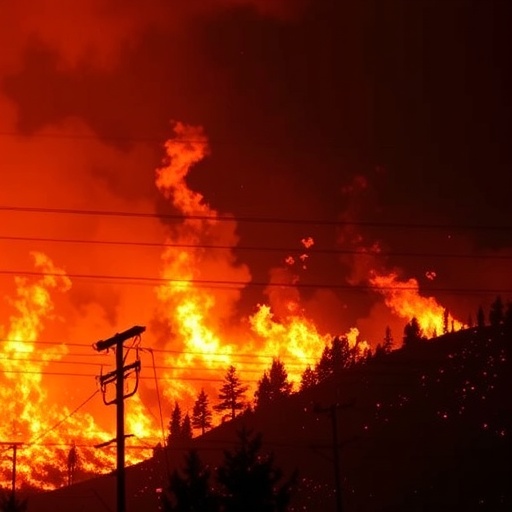
Wildfires have become an increasingly devastating reality in California, particularly in areas like Los Angeles where January’s wildfires resulted in catastrophic damage to over 12,900 households and inflicted an estimated $30 billion in total losses. This alarming situation has spurred fire-prone communities across the state to seek actionable strategies that will offer better protection against such destructive events. In this context, a pioneering study led by researchers at the University of California, Berkeley, has emerged, providing valuable insights into how specific wildfire mitigation strategies might reduce destruction by as much as 50%.
The study’s inquiry into the effectiveness of home hardening reveals that strategic modifications to residential infrastructure can make homes much more resilient against the flames. Home hardening entails a variety of measures—ranging from installing fire-resistant materials for siding and roofing, ensuring vents are safeguarded against embers, to the adoption of double-paned tempered glass windows that are less likely to shatter under extreme heat. These measures are crucial in the prevention of fire ignition within homes while a complementary strategy known as defensible space plays an equally vital role. This involves maintaining a clear, vegetation-free buffer around homes, thus reducing the fuel that a fire requires to spread.
Importantly, the study underscores the necessity for data that convincingly demonstrates these recommendations’ efficacy, especially given the challenges homeowners face when considering renovations. The use of advanced wildfire simulation tools, combined with real-world data sourced from five of the most destructive fires experienced in California leading up to 2022, was central to the researchers’ methodological approach. Their analysis revealed that implementing both home hardening techniques and defensible space properties can dramatically enhance the survival rates of structures during wildfire incidents. The data indicates that even the relatively simple act of removing the vegetation within a 5-foot perimeter around homes can lead to a noteworthy reduction in structural losses—up to 17%.
Michael Gollner, a key author of the study and associate professor of mechanical engineering at Berkeley, emphasized the real-world impact of these mitigation measures, stating, “This offers strong evidence that the strategies available can significantly lessen property damage.” Gollner further elaborated on the dual advantages of these measures, noting that they not only increase the chances of structures surviving wildfires but also slow the spread of flames, thereby allowing residents more time to evacuate while providing emergency responders with a crucial window for intervention.
Despite these promising findings, implementing effective mitigation strategies on a broader scale faces several obstacles. One of the primary challenges is the diverse configuration of structures within fire-prone communities; Gollner pointed out that while individual property modifications can yield significant results, collective action is critical. “How effectively we can prevent fire from spreading throughout a community often depends on neighbors working together,” he noted. This interdependence complicates the task of fostering the necessary social and political will for these vital changes.
The comprehensive nature of this research was amplified by the careful examination of a diverse dataset sourced from CAL FIRE’s damage inspection database, which catalogues on-the-ground surveys of structures impacted by major wildfires over the last decade. This database included records from significant incidents such as the Tubbs and Thomas fires in 2017, the Camp fire in 2018, the Kincade fire in 2019, and the Glass fire in 2020. By integrating additional geospatial information, the researchers were able to analyze not only the survivability of structures but also various risk factors such as the spacing between buildings, construction materials, and the density of surrounding vegetation.
By employing advanced machine learning techniques, the research team constructed a predictive model that boasts an impressive accuracy rate of 82% in forecasting whether structures would withstand wildfire exposure. This model assesses how different variables—such as separation distance between buildings, types of construction materials, and the presence or absence of defensible space—interact to influence the risk levels. The findings illustrate that the separation distance between structures plays a paramount role in determining vulnerability, especially in densely built areas where fires tend to propagate from one structure to another. Increased flame lengths were also identified as significant contributors to the possibility of structural destruction.
Despite the valuable data generated by this study, Gollner’s team remains acutely aware of the sociopolitical complexities that encumber the widespread adoption of the protective measures recommended. The controversial debates surrounding California’s proposed “Zone Zero” regulations, which mandate vegetation clearance around properties, serve as a testament to the significant pushback that can occur when such policies are introduced. Achieving widespread compliance within communities is a daunting challenge, requiring cooperation and alignment among multiple stakeholders.
Ultimately, the study serves as a critical reminder of the tangible benefits associated with investing in wildfire mitigation strategies. Gollner expressed hope that the research will catalyze more extensive discussions surrounding the necessity of such measures. “It is essential for us to justify the investments we are making in mitigation, and the data reveals that there are indeed notable returns in terms of risk reduction,” he remarked, emphasizing the importance of motivating communities to come together in the fight against wildfires.
In sum, this remarkable research sheds light on the imperative need for individuals and communities to adopt collective and informed approaches to wildfire safety. By focusing on evidence-based strategies such as home hardening and defensible space, there exists a potent opportunity not only to protect structures from fire damage but also to save lives and preserve entire communities from the ravages of wildfires. As climate change continues to exacerbate fire risks across California and the broader western United States, the findings of this study become ever more critical in partaking in meaningful conversations and actions towards sustainable mitigation efforts.
Keywords
wildfire mitigation, home hardening, defensible space, California, wildfires, structural survivability, safety, community engagement, prevention strategies, environmental safety.
Cite Scienmag News
Denise Maddox. (August 28, 2025). Study Reveals Wildfire Mitigation Strategies Could Reduce Destruction by 50%. Scienmag. https://scienmag.com/study-reveals-wildfire-mitigation-strategies-could-reduce-destruction-by-50/
Denise Maddox. "Study Reveals Wildfire Mitigation Strategies Could Reduce Destruction by 50%." Scienmag, 28 August 2025, https://scienmag.com/study-reveals-wildfire-mitigation-strategies-could-reduce-destruction-by-50/. Accessed 4 September 2026.
Denise Maddox. "Study Reveals Wildfire Mitigation Strategies Could Reduce Destruction by 50%." Scienmag. August 28, 2025. https://scienmag.com/study-reveals-wildfire-mitigation-strategies-could-reduce-destruction-by-50/


