


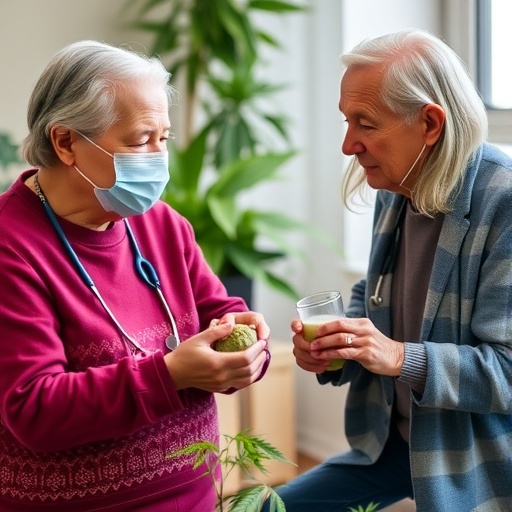
A recent comprehensive analysis conducted by Rutgers Health researchers reveals a striking communication gap between older adults who use cannabis and their healthcare providers. The study, poised for publication in the August 2026 issue of the American Journal of Preventive Medicine, found that fewer than 20 percent of adults over 65 years old who consume cannabis engage in discussions about their use with clinicians. This gap highlights a significant public health concern as cannabis use continues to rise within this demographic.
The research utilized nationally representative data from over 14,000 older adults collected between 2021 and 2023. The primary focus was to quantify the prevalence of cannabis and other drug use screenings and conversations between patients and healthcare providers. Findings showed that while approximately one-third of older adults were screened for cannabis or other drug use in the past year, a markedly smaller fraction who reported cannabis use—whether recreational or medicinal—had discussions with their healthcare professionals.
This discrepancy is particularly concerning given the unique vulnerabilities present in the older adult population. Aging correlates with a heightened likelihood of chronic medical conditions, polypharmacy, and physiological changes that might amplify the potential adverse effects of cannabis. The absence of open dialogue about cannabis use may impede clinicians’ ability to anticipate and manage potential drug interactions or adverse events effectively.
Pia Mauro, a core member of Rutgers’ Center for Pharmacoepidemiology and Treatment Science and lead author of the study, emphasized the critical need for clinicians to proactively address cannabis use. She underscored that cannabis consumption is climbing among older adults, with 10.5 percent reporting use in the past year as per the 2024 National Survey on Drug Use and Health data. Despite this upward trend, the reluctance or discomfort by clinicians in initiating screenings and conversations about cannabis use remains a barrier to optimized patient care.
Clinician discomfort often stems from ambiguity regarding the medical pharmacodynamics and potential risks associated with cannabis in aging populations. There exists a pronounced need for continued professional education focusing on cannabis’ therapeutic potential, contraindications, side effects, and its complex interactions with standard geriatric medications. Increased knowledge among healthcare providers would facilitate evidence-based counseling, enabling responsible cannabis use while minimizing harm.
The study’s analytical framework leveraged advanced statistical methods to explore demographic disparities in screening rates. Intriguingly, older women and Hispanic or Latine older adults reported significantly lower rates of cannabis screening and discussions with their clinicians. Experts posit that these disparities may mirror broader societal and systemic issues such as cultural stigma, healthcare access inequalities, and differential cannabis use patterns across gender and racial lines.
Addressing these disparities requires multifaceted interventions inclusive of culturally competent education for both providers and patients, enhancement of healthcare access, and structural reforms to reduce systemic barriers. Additionally, expanding research to integrate geographical data would shed light on how local and state-level cannabis legalization policies shape patient-provider interactions around cannabis use.
Rutgers researchers advocate the integration of cannabis use screening as a routine aspect of geriatric medical evaluations. The implementation of validated single-item screening tools offers a time-efficient mechanism to initiate crucial conversations. These tools empower clinicians to detect cannabis use promptly, assess potential risks, and guide patients towards safer consumption practices or cessation if necessary.
Awareness campaigns tailored towards both healthcare professionals and older adults may bridge the informational void inhibiting open cannabis discussions. Knowledge dissemination regarding cannabis’ pharmacokinetics, risks in the context of chronic diseases such as hypertension or diabetes, and its impact on cognitive and motor function is imperative. Such communication promotes safer drug management regimens, reducing adverse events and improving overall patient outcomes.
The study’s significance is amplified by its support from the National Institute on Drug Abuse, underlining the growing importance of substance use research in an aging population. It catalyzes a critical discourse around how health systems can evolve to incorporate cannabis-related health concerns into comprehensive elder care paradigms amidst changing societal norms surrounding cannabis.
In essence, this investigation illuminates a considerable missed opportunity within clinical practice to identify and manage cannabis use among older adults—an oversight that jeopardizes patient safety and impairs holistic care. It challenges healthcare systems to adapt, normalize cannabis discussions, and ensure that older adults receive timely, accurate, and nonjudgmental information from trusted professionals.
Researchers also call for longitudinal studies to track the long-term health outcomes of cannabis use in older populations and to assess the efficacy of various screening approaches. This will guide the development of nuanced clinical guidelines and protocols customized for geriatric patients, thereby refining preventative strategies and therapeutic interventions within this demographic.
This groundbreaking work, coauthored by Mireia Triguero Roura, Elsa Carey, and Benjamin Han, paves the way for transformative changes in geriatric healthcare. It underscores the imperative that as cannabis legalization and usage expand, healthcare providers must equally broaden their competencies and comfort levels to respond ethically and effectively to the needs of older adults navigating cannabis use.
News Publication Date: 19-Jul-2026
Web References:
https://www.ajpmonline.org/article/S0749-3797(26)00047-4/fulltext
https://www.samhsa.gov/data/report/2024-nsduh-detailed-tables
References:
DOI: 10.1016/j.amepre.2026.108304
Cite Scienmag News
Ophelia Keating. (June 4, 2026). Study Reveals Older Adults Seldom Talk About Cannabis Use with Healthcare Providers. Scienmag. https://scienmag.com/study-reveals-older-adults-seldom-talk-about-cannabis-use-with-healthcare-providers/
Ophelia Keating. "Study Reveals Older Adults Seldom Talk About Cannabis Use with Healthcare Providers." Scienmag, 4 June 2026, https://scienmag.com/study-reveals-older-adults-seldom-talk-about-cannabis-use-with-healthcare-providers/. Accessed 6 September 2026.
Ophelia Keating. "Study Reveals Older Adults Seldom Talk About Cannabis Use with Healthcare Providers." Scienmag. June 4, 2026. https://scienmag.com/study-reveals-older-adults-seldom-talk-about-cannabis-use-with-healthcare-providers/


