

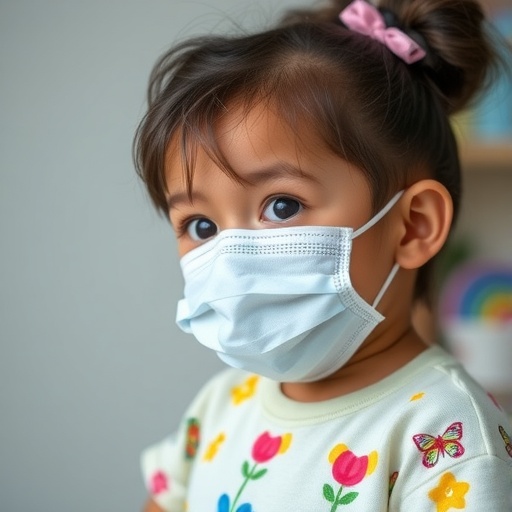
The Covid-19 pandemic has left deep and lasting scars on many aspects of society, but one of the most subtle and potentially profound impacts has been on the cognitive and behavioral development of young children. Research emerging from the University of East Anglia (UEA) sheds light on how the extraordinary disruptions brought about by the pandemic hindered children’s executive function development—a critical set of cognitive processes that underpin self-regulation, attention control, and adaptive behavior. These foundational skills, which normally flourish during the earliest formal years of schooling, appear to have been significantly stunted for children who were at a crucial educational starting point when lockdowns first shuttered schools in 2020.
Executive functions, a cluster of interrelated mental abilities including inhibitory control, cognitive flexibility, and working memory, enable children to manage impulses, shift focus between tasks, and adapt to changing demands. This suite of skills is essential not only for academic success but also for social interaction and emotional well-being. The UEA research team, led by Professor John Spencer from the School of Psychology, capitalized on a fortuitously timed longitudinal study that spanned the toddler to early school years, thereby providing a rare pre-pandemic baseline against which to measure Covid-19’s developmental impact.
Their work tracked 139 children aged between two-and-a-half and six-and-a-half years over several years, including 94 participants who were actively engaged in the study prior to the onset of the global health crisis. This design afforded unprecedented visibility into how executive functions evolved—and in many cases, plateaued or lagged—during and after the pandemic’s most disruptive phases. The team employed the Minnesota Executive Function Scale, a standardized assessment tool, to consistently evaluate the cognitive and self-regulatory capabilities of these children at multiple time points.
The most striking finding was that children who were in their reception year—the UK equivalent of kindergarten and typically the first structured school experience—when the pandemic hit were disproportionately affected. This developmental stage, often marked by rapid gains in self-regulatory skills and social confidence, turned into a lost opportunity for many. The abrupt closure of classrooms and dismantling of daily routines deprived these children of the regular peer interactions and guided learning experiences normally critical for mastering social norms and executive processes.
Professor Spencer emphasized that these reception-age children displayed markedly slower trajectories in developing abilities such as cognitive flexibility and impulse control compared to their preschool peers, who had not yet entered formal schooling at the pandemic’s onset. “Reception is a pivotal period for peer socialisation and the internalization of classroom norms,” Spencer noted. “Without the structured school environment, these children missed out on the vital scaffolded practice of shifting attention, managing behavior, and navigating social cues.” This deficit has ripple effects beyond academia, as early self-regulation predicts long-term emotional resilience and social competence.
Furthermore, the research uncovered the compounding factor of increased Covid infections within this vulnerable cohort, which may have exacerbated developmental delays through repeated absences and health-related disruptions. While the study did not isolate the precise physiological effects of the virus on brain development, the correlation suggests that illness patterns could intertwine with environmental deprivation to deepen executive function lags.
In striking contrast, children who were still in preschool when the pandemic began demonstrated more robust progress in these skills over the same period. Their delayed entry into formal education may have inadvertently shielded them from the most pronounced disruptions during the critical reception year. This nuanced finding hints at the complex interplay of timing, environment, and developmental windows in shaping cognitive trajectories.
Importantly, the study confirmed that individual differences in executive function showed remarkable stability from toddlerhood into early school years. Children who began with stronger self-regulatory skills persisted in outperforming their peers, underscoring the importance of early identification and intervention. Additionally, socio-economic disparities remained pronounced, with children from less advantaged backgrounds consistently scoring lower, reflecting deep-rooted inequalities in access to enriching environments and educational resources.
The implications of these findings resonate far beyond the academic sphere. They call for a recalibration of educational and health policies to provide targeted support for a generation of children facing potentially lasting developmental setbacks. Schools, mental health services, and community programs must collaborate to offer tailored interventions that bolster executive functions through enriched social experiences and cognitive training, especially for those who missed the foundational reception year milestones.
Moreover, this research raises urgent questions about preparedness for future public health crises. How can policymakers balance necessary containment measures with the developmental needs of young children? The trade-offs between physical health safeguards and cognitive-social development demand nuanced strategies that minimize harm while maintaining safety.
While the Covid pandemic has been an unprecedented global challenge, the lessons from this longitudinal study highlight the resilience and vulnerability of early childhood development. Through scientific rigor and timely insight, researchers have illuminated the pathways through which societal disruptions ripple into individual lifespans, reminding us of the critical need to protect and nurture the youngest minds during times of crisis.
As educational institutions and communities rebuild post-pandemic, the UEA study serves as a clarion call to recognize the hidden cognitive tolls and to act decisively to support children’s executive function development. By fostering environments rich in social engagement and structured learning, there is hope that affected children can recover lost ground, strengthening their ability to thrive in an ever-changing world.
Subject of Research: People
Article Title: Tracking the trajectory of executive function from 2.5 to 6.5 years of age and the impact of COVID‐19
News Publication Date: 4-Mar-2026
Keywords: Developmental psychology, Cognitive development, Executive function, Self-regulation, Cognitive flexibility, Early childhood education, Covid-19 impact, Longitudinal study, Child development, Peer socialisation, Socio-economic disparities, Minnesota Executive Function Scale


