


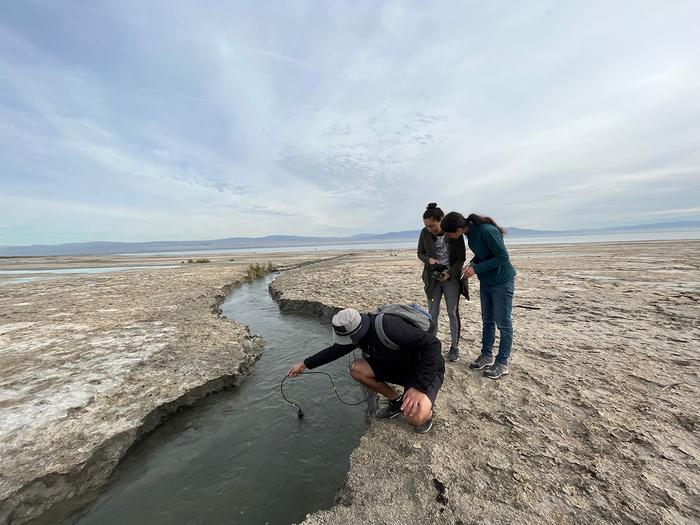
A recent study conducted by researchers from Brown University and several other institutions has unveiled alarming findings regarding the Salton Sea in California, specifically regarding the emission of hydrogen sulfide—a highly toxic and odorous gas. Notably, the study highlights that the emissions often surpass California’s air quality standards, placing nearby communities at risk due to significantly underestimated monitoring systems. As communities grapple with a multitude of environmental and socioeconomic challenges, the consequences of these emissions are profound and far-reaching.
This comprehensive study, published in the journal GeoHealth, reveals the potential health hazards of hydrogen sulfide emissions in areas already burdened by adverse environmental conditions. The research underscores the critical importance of accurate air quality data, especially in regions like the Salton Sea, where vulnerable populations reside. These findings suggest a pressing need for enhanced regulatory oversight and community awareness concerning air quality, emphasizing the role of scientific research in addressing public health crises.
Historically, the Salton Sea has undergone significant ecological changes since its formation in 1905 due to an irrigation canal breach from the Colorado River. While it once served as a recreational hub in the mid-20th century, the lake’s decline—driven by climate change and water diversion policies—has led to increased salinity and nutrient levels. This has, in turn, fostered a toxic environment; organic matter decomposition at the lake results in hydrogen sulfide emissions, which pose serious health risks to nearby residents, including respiratory issues, headaches, and long-term neurological effects.
The geographical context of the Salton Sea is critical to understanding this environmental crisis. Located approximately 160 miles east of Los Angeles, the lake has seen its shoreline recede dramatically over recent decades. This decline has rendered surrounding communities susceptible to air quality hazards, compounding their existing environmental stresses. Researchers emphasize that those most affected are predominantly lower-income and Indigenous populations, highlighting an unsettling aspect of environmental injustice in the region.
The collaboration between Brown University and Alianza Coachella Valley, a nonprofit organization focused on community health advocacy, has strengthened the findings of this study. Through an innovative combination of empirical data from air quality sensors and remote monitoring techniques, the team was able to establish a more accurate assessment of hydrogen sulfide levels in the air throughout the region. This collaboration exemplifies how scientific research can empower communities to advocate for their health and well-being.
Over recent years, data collection efforts have indicated that emissions from the Salton Sea exceed state standards, particularly in specific areas such as the communities of Indio, Mecca, and the Torres Martinez Indian Reservation. Notably, during the summer months, these exceedances became more pronounced, with measurements revealing that the devastating impacts of hydrogen sulfide emissions go unrecorded by traditional monitoring systems. This misalignment of data raises serious concerns about regulatory compliance and the fundamental fairness of air quality monitoring practices.
Despite a lack of comprehensive monitoring infrastructure, researchers found that hydrogen sulfide levels surged primarily when wind patterns directed emissions toward populated areas. Additional targeted sensors placed within the lake itself indicated persistently high levels of hydrogen sulfide, confirming the lake as the primary source of these toxic emissions. This evidence challenges assumptions held by regulatory bodies and calls for immediate action to reassess how air quality is monitored across these vulnerable communities.
A troubling aspect of the findings is that while only limited monitoring exists—focusing on a mere three communities along the Salton Sea’s extensive shoreline—substantial emissions may continue to affect residents in unmonitored areas. The fact that significant portions of these emissions remain unmeasured underscores the inadequacies inherent in conventional monitoring systems, which fail to convey a full picture of the environmental health threat posed by the Salton Sea.
With environmental conditions continuing to worsen, the cohort of researchers warns of potential future public health crises. As the lake’s shoreline continues to diminish, the concentration of harmful chemicals, including hydrogen sulfide, is likely to increase, further exacerbating the health risks faced by residents. This prediction emphasizes the pressing need for both immediate interventions and long-term strategies to protect at-risk communities from exposure to toxic air pollutants.
The researchers underscore the importance of community involvement and advocacy in addressing the challenges posed by hydrogen sulfide emissions. By implementing equitable air quality monitoring systems, alongside increased awareness programs, better outcomes can be achieved for the residents affected by this environmental crisis. The fundamental goal is not just to protect public health but to promote holistic approaches to environmental management and social justice.
Recent funding from the Burroughs Wellcome Fund, Google Environmental Justice Data Fund, and NASA has supported the research team’s efforts, although the abrupt termination of one grant has caused disruptions in planned follow-up work. This has highlighted the vulnerability of research initiatives reliant on external funding, which can impede ongoing community engagement and collaboration.
In conclusion, the findings from this groundbreaking study shed light on a critical public health issue, urging local and state authorities to reassess monitoring strategies and implement necessary actions to mitigate pollution exposure. The collaboration between scientific experts and community organizations serves as an exemplar of how combined efforts can lead to impactful change. As pressure mounts to confront environmental injustices rooted in historical neglect, the health and safety of vulnerable populations urgently demand attention.
Keywords
Environmental health, Air quality monitoring, Hydrogen sulfide, Public health, Environmental justice, Salton Sea, Toxins, Socioeconomic impacts, Community science, Health disparities, Climate change, Pollution.
Cite Scienmag News
Russell Cooper. (June 2, 2025). Study Reveals Air Quality Monitoring Fails to Capture Toxic Emissions Affecting Salton Sea Communities. Scienmag. https://scienmag.com/study-reveals-air-quality-monitoring-fails-to-capture-toxic-emissions-affecting-salton-sea-communities/
Russell Cooper. "Study Reveals Air Quality Monitoring Fails to Capture Toxic Emissions Affecting Salton Sea Communities." Scienmag, 2 June 2025, https://scienmag.com/study-reveals-air-quality-monitoring-fails-to-capture-toxic-emissions-affecting-salton-sea-communities/. Accessed 4 September 2026.
Russell Cooper. "Study Reveals Air Quality Monitoring Fails to Capture Toxic Emissions Affecting Salton Sea Communities." Scienmag. June 2, 2025. https://scienmag.com/study-reveals-air-quality-monitoring-fails-to-capture-toxic-emissions-affecting-salton-sea-communities/


