


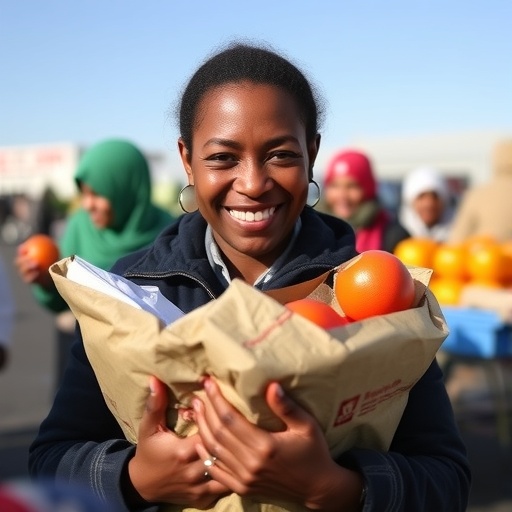
Food insecurity is no longer being addressed solely through government welfare programs. Across wealthy countries, food banks, charities and philanthropic organizations have become a parallel support system for millions of households. Now, the first comprehensive national mapping of Israel’s philanthropic food-aid network has revealed a vast, rapidly expanding structure—one that mobilizes billions of shekels and hundreds of thousands of people, yet remains difficult to evaluate because basic information about what it delivers and who receives it is often missing.
Published in Food Policy, the study by researchers from the Hebrew University of Jerusalem and Sheba Medical Center identified 2,289 active nongovernmental organizations involved in food assistance across Israel. Together, these organizations form a decentralized network that includes food banks, community charities, religious institutions, social-service groups and other philanthropic providers. The researchers analyzed the system through three standard dimensions used in food-aid research: effectiveness, efficiency and equity. Their findings suggest that the network has enormous capacity, but that its actual impact cannot yet be measured with the precision expected of a modern public-health system.
The financial scale of the network is striking. Among organizations that reported financial information, combined annual turnover reached 6.18 billion Israeli new shekels, equivalent to approximately US$1.64 billion. Only 13% of that reported turnover came from state allocations. The remainder was supported largely by domestic and international donations, charitable grants and in-kind contributions such as food products, equipment and services. These organizations also reported more than 28,000 salaried employees and approximately 173,000 volunteers, illustrating how philanthropy has become a major logistical force in the national response to food insecurity.
Yet financial size does not automatically translate into measurable nutritional benefit. Most organizations in the study distribute food products rather than vouchers or cash assistance. That distinction is technically important because food parcels vary widely in their quantity, nutritional composition, shelf life and cultural suitability. Available administrative records generally do not capture how many kilograms of food are distributed, how much protein or energy the parcels provide, whether fresh produce is included, where the food originated or whether it ultimately reached the intended household. Without those data, researchers cannot reliably calculate the network’s coverage, cost per recipient or contribution to dietary adequacy.
The absence of standardized information also limits the ability to assess health outcomes. Food insecurity is associated with higher risks of chronic disease, developmental problems, mental-health difficulties and increased use of medical services. However, charitable food systems rarely operate with the same monitoring infrastructure as public-health programs. Records may count parcels, meals or visits, but not consistently track household size, dietary needs, disability, age, pregnancy, disease status or repeated periods of food insecurity. This makes it difficult to determine whether assistance is preventing nutritional harm or merely providing short-term relief while underlying deprivation continues.
The study found evidence that the geographic distribution of food-aid organizations does not fully correspond to the distribution of need. Only 4% of registered food-aid NGOs were classified as operating in Arab communities, despite substantially higher reported rates of food insecurity among Arab households. Regional differences were also pronounced. Approximately 29% of the organizations operated in the Jerusalem region, while only 9% operated in the North, even though both regions contain large populations, significant poverty and comparable shares of the country’s residents. The figures do not prove that residents in underserved areas receive no assistance, but they do indicate potential gaps in organizational capacity and access.
These inequalities may arise from several mechanisms. Charities often depend on local donors, transportation networks, volunteer availability and the visibility of a community’s needs. Areas with stronger philanthropic infrastructure can attract more organizations, while remote or marginalized communities may face higher operating costs and fewer resources. Food distribution can therefore follow fundraising capacity rather than epidemiological need. Unlike a centrally planned public program, a fragmented charitable network may lack a national allocation formula that directs supplies according to poverty rates, household composition or measured food insecurity.
“From a health system perspective, food insecurity is not only a social issue but a clinical one,” said Dr. Orly Tamir of Sheba Medical Center. “When access to adequate nutrition depends on fragmented charitable systems, the consequences are reflected in population health, disparities, and long-term system burden.” Her observation reflects a growing international concern: food aid is increasingly functioning as part of the health and welfare infrastructure in countries where governments may not directly provide enough support to guarantee consistent access to nutritious food.
The researchers emphasize that their findings should not be interpreted as evidence that charitable assistance is ineffective. Volunteers and nonprofit organizations provide immediate support to families who might otherwise go without food, and philanthropic networks can respond rapidly during economic crises, emergencies and disruptions in public services. But the study raises a larger policy question about the boundary between temporary relief and essential infrastructure. Prof. Aron M. Troen said that civil society performs extraordinary work, but that “a modern state cannot rely on charity alone to ensure access to healthy food.” Moran Accos added that food security must be treated as a year-round policy responsibility rather than a seasonal act of generosity.
The authors call for systematic data collection, stronger oversight, nutritional standards and closer coordination between charities and public agencies. A more integrated system could record the quantity and nutritional value of food distributed, establish common definitions for recipients and services, map unmet need, and evaluate whether assistance reaches households equitably. The available data do not yet allow researchers to directly link people receiving public benefits with those receiving NGO assistance, so the interaction between the two systems remains unclear. As philanthropic food-aid networks expand across high-income countries, Israel’s experience offers a warning with global relevance: generosity can mobilize impressive resources, but without transparency, coordination and public accountability, it is difficult to know whether those resources are reaching the people who need them most.
News Publication Date: 10-Aug-2026
Web References: https://doi.org/10.1016/j.foodpol.2026.103069
References: Food Policy, DOI: 10.1016/j.foodpol.2026.103069
Cite Scienmag News
Courtney Benton. (August 10, 2026). Study questions whether expanding charitable food aid strengthens long-term food security policy. Scienmag. https://scienmag.com/study-questions-whether-expanding-charitable-food-aid-strengthens-long-term-food-security-policy/
Courtney Benton. "Study questions whether expanding charitable food aid strengthens long-term food security policy." Scienmag, 10 August 2026, https://scienmag.com/study-questions-whether-expanding-charitable-food-aid-strengthens-long-term-food-security-policy/. Accessed 4 September 2026.
Courtney Benton. "Study questions whether expanding charitable food aid strengthens long-term food security policy." Scienmag. August 10, 2026. https://scienmag.com/study-questions-whether-expanding-charitable-food-aid-strengthens-long-term-food-security-policy/


